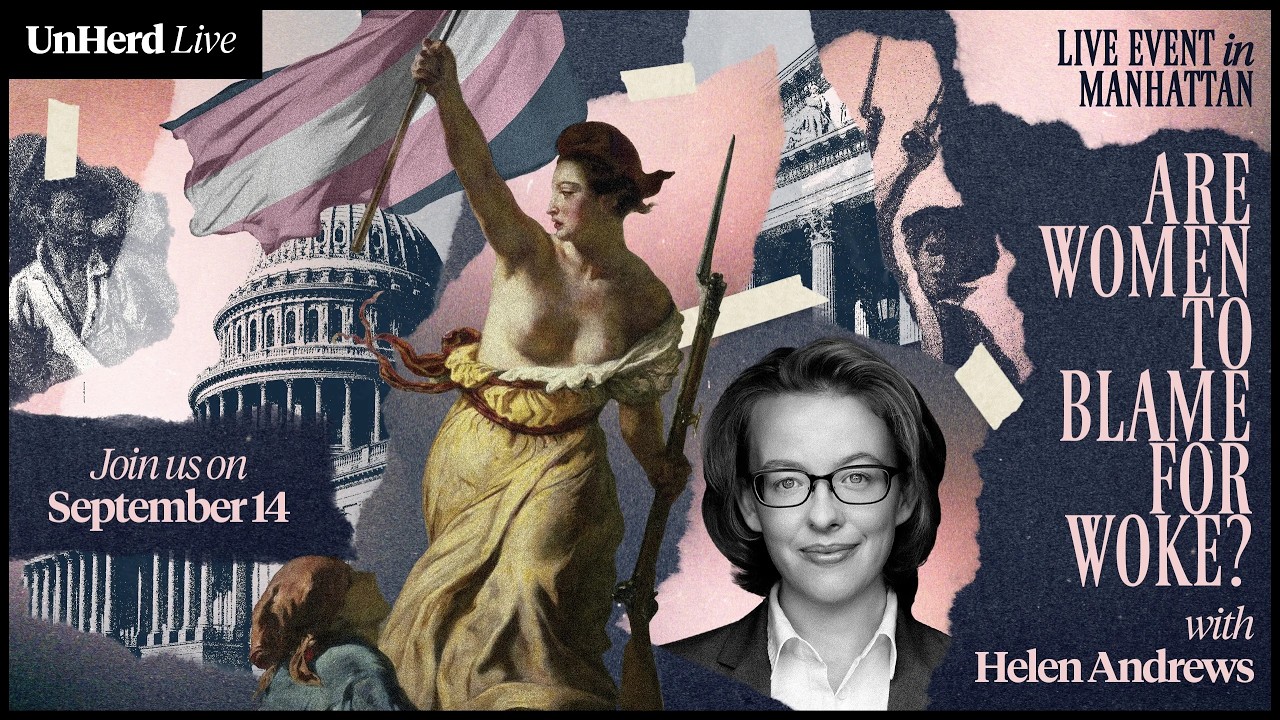
# The Gender Paradox of "Woke" Culture: Why Women Drive Progressive Movements Despite Conservative Leanings
## New research suggests women may be the primary architects of progressive social change, even as they remain more socially conservative than men in several key areas The rise of "woke" culture has sparked intense debate about its origins and driving forces. While much attention has focused on mal
New research suggests women may be the primary architects of progressive social change, even as they remain more socially conservative than men in several key areas
The rise of "woke" culture has sparked intense debate about its origins and driving forces. While much attention has focused on male-dominated institutions and radical activism, an often-overlooked pattern emerges when examining who actually powers progressive movements: women.
This raises a provocative question: Are women primarily responsible for the spread of woke ideology? The answer, according to emerging research, is more nuanced—and more surprising—than simple stereotypes suggest.
The Female Progressive Advantage
Women consistently outpace men in several measurable indicators of progressive engagement. They are more likely to:
- Hold progressive political views on social issues
- Participate in protests and demonstrations
- Vote for left-leaning candidates
- Work in institutions that promote diversity and inclusion initiatives
- Support policies addressing climate change and social inequality
This pattern holds across Western democracies, suggesting a structural rather than incidental phenomenon.
The Paradox of Female Conservatism
Yet women simultaneously display more conservative tendencies than men in specific domains. They tend to be more religious, more supportive of traditional family structures, and more skeptical of certain radical social experiments. This contradiction demands explanation.
The resolution lies in understanding that women's conservatism operates at the personal and community level, while their progressivism manifests in broader political and institutional contexts. Women may prefer stability in their immediate lives while supporting systemic change for society at large.
Institutional Power and Cultural Influence
Women now constitute the majority in several key institutions that shape cultural narratives:
- Education: Women earn more university degrees than men and dominate teaching professions at primary and secondary levels
- Media and Communications: Female journalists and content creators increasingly influence public discourse
- Human Resources: Women hold most HR positions, giving them significant power over hiring and workplace culture
- Nonprofit and Advocacy Sectors: Women lead many organizations focused on social change
These positions provide platforms for promoting progressive values, explaining how women's influence extends beyond their individual political preferences.
The Question of Causation
Does female dominance in these sectors cause woke culture, or do women gravitate toward fields that already embrace progressive values? This chicken-and-egg problem resists simple answers.
What remains clear is correlation: societies with greater female institutional participation tend to have more robust progressive movements. Whether this represents causation, selection bias, or broader cultural evolution remains contested among researchers.
Beyond Blame and Credit
Framing the question as "blame" obscures more important considerations. Progressive social change reflects complex interactions between economic conditions, generational shifts, technological transformation, and institutional dynamics—not simply the preferences of any single demographic group.
Women's disproportionate role in progressive movements may reflect their historical exclusion from traditional power structures, making them more attuned to systemic inequalities. Alternatively, it may stem from biological or psychological differences in risk tolerance and social orientation.
The Path Forward
Understanding women's role in shaping contemporary culture requires moving beyond simplistic narratives. Neither celebrating nor condemning women for progressive trends advances meaningful dialogue.
What matters is recognizing that social change emerges from countless individual choices made within specific institutional and cultural contexts. Women's choices have proven particularly consequential—not because women are monolithic in their views, but because their collective participation in key institutions has reached critical mass.
The question isn't whether women are "to blame" for woke culture. It's whether any demographic group should wield such disproportionate influence over cultural direction—and what that means for democratic societies navigating rapid social transformation.