The Courage Conundrum: Why Criticizing Israel Is No Longer a Political Risk
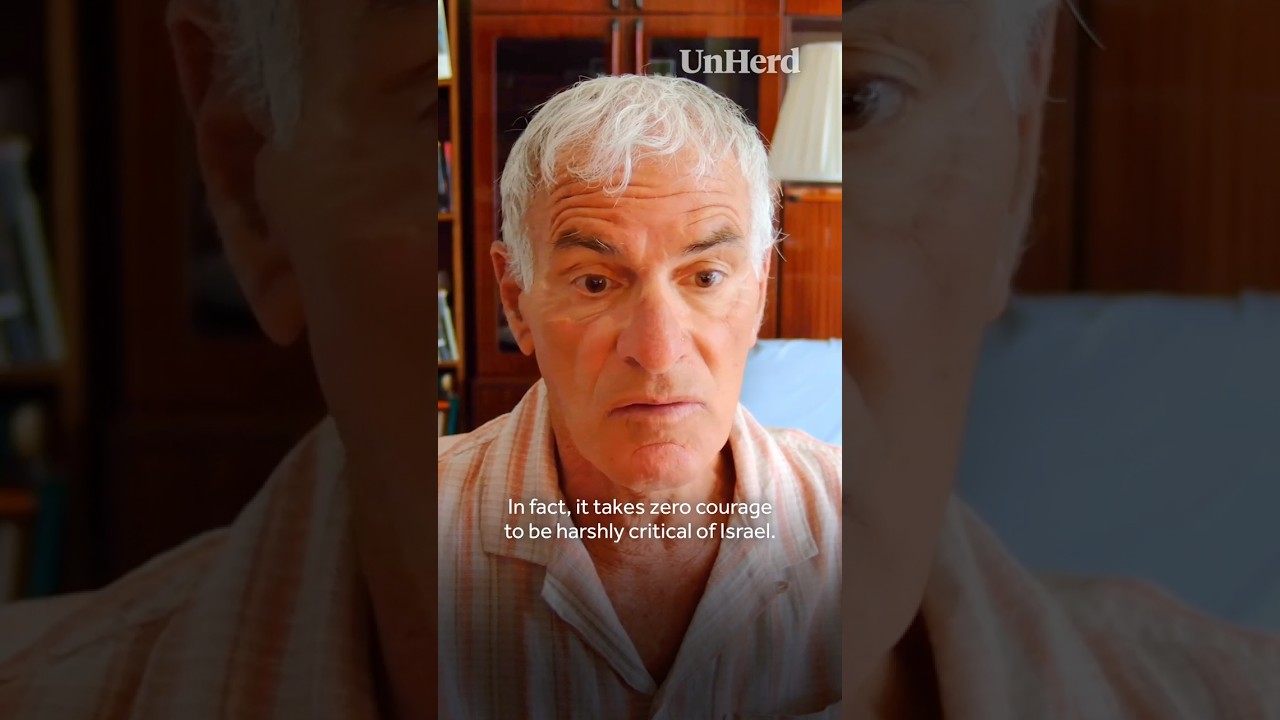
In a recent short-form video, political scientist and author Norman Finkelstein made a provocative claim that cuts against the grain of conventional political discourse: “It takes zero courage to be critical of Israel. ” The statement, delivered with his characteristic bluntness, challenges the long
In a recent short-form video, political scientist and author Norman Finkelstein made a provocative claim that cuts against the grain of conventional political discourse: “It takes zero courage to be critical of Israel.” The statement, delivered with his characteristic bluntness, challenges the long-held assumption that speaking out against Israeli government policy constitutes a form of professional or personal sacrifice.
Finkelstein’s assertion is not a dismissal of the moral weight of the issue, but rather a recalibration of the political landscape. For decades, the dominant narrative in Western media and academia suggested that vocal criticism of Israel was a career-ending move, a stance that invited accusations of antisemitism and social ostracism. Finkelstein argues that this era has effectively ended.
The core of his argument rests on a shift in public opinion and institutional power. He suggests that the calculus of risk has inverted. In today’s environment, particularly among younger demographics and within academic institutions, pro-Palestinian advocacy has become a mainstream position. Conversely, Finkelstein implies, it is now the defenders of Israeli policy who face a more difficult task in justifying their position to a global audience increasingly exposed to the realities of the occupation.
This perspective reframes the debate. It moves the conversation away from the courage of the critic and toward the substance of the critique. If criticizing Israel is no longer a brave act, then the arguments themselves must stand on their own merits, subject to the same rigorous scrutiny as any other political analysis. Finkelstein’s point is that the shield of “courage” has been removed, leaving the underlying facts—and the arguments built upon them—exposed to objective evaluation.
For non-native speakers and observers of the discourse, the takeaway is clear: the center of gravity in the Israel-Palestine debate has shifted. What was once considered the fringe is now the norm in many circles. The courage narrative has been replaced by a demand for accountability and factual accuracy. Whether one agrees with Finkelstein’s politics, his observation forces a reassessment of the costs and benefits of speaking out on one of the most contentious issues of our time.