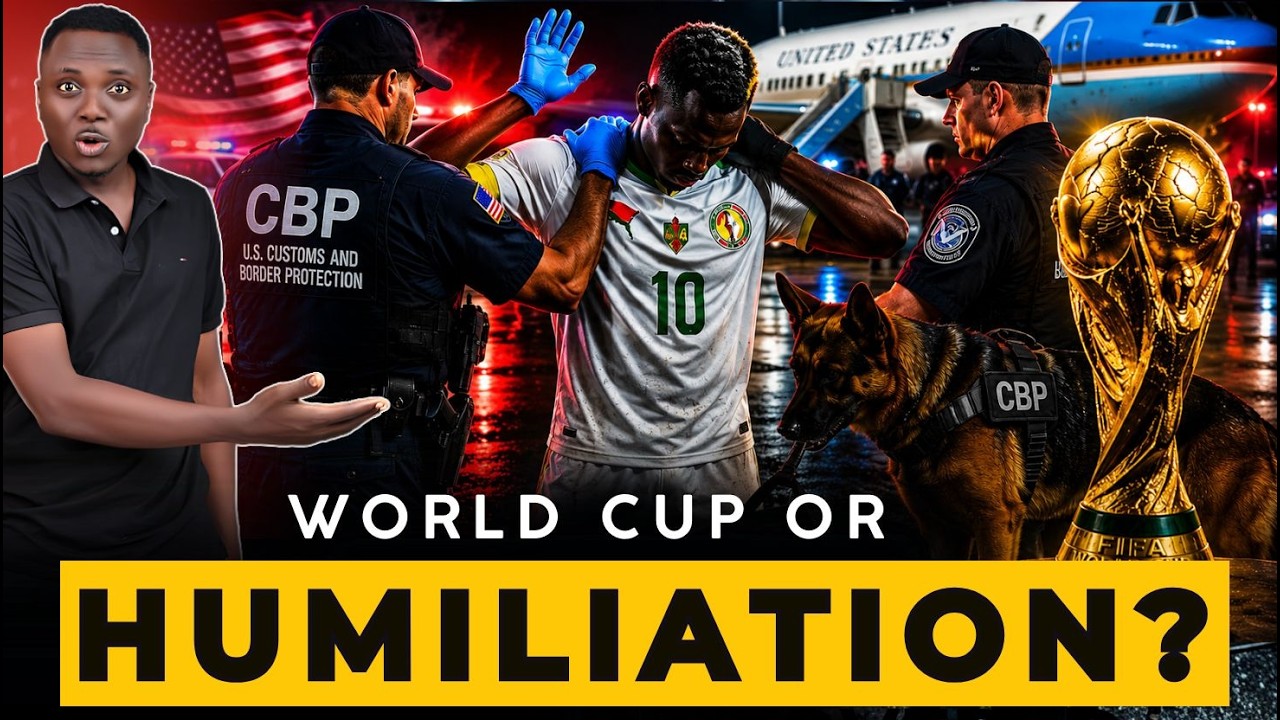
Title: The World Cup That Wasn’t: How the U.S. Outmaneuvered Africa on the Global Stage
Introduction In a move that has sent shockwaves through the international sports and diplomatic community, the United States has secured the rights to host the 2031 Men’s Rugby World Cup. For many African nations, this decision is not a celebration of global unity but a bitter confirmation of a
Introduction
In a move that has sent shockwaves through the international sports and diplomatic community, the United States has secured the rights to host the 2031 Men’s Rugby World Cup. For many African nations, this decision is not a celebration of global unity but a bitter confirmation of a persistent pattern: when the world’s biggest events are awarded, Africa is once again left on the sidelines. The question being asked from Lagos to Nairobi is no longer whether the continent can compete, but whether it is being deliberately humiliated.
The Decision That Changed the Game
World Rugby, the sport’s global governing body, announced in May 2023 that the United States would host the 2031 Rugby World Cup. This marks the first time the tournament will be held in the Americas. The bid was uncontested, with no other nations putting forward a rival proposal. While the U.S. celebrated what it called a “historic milestone,” critics argue that the process was neither transparent nor equitable.
Africa’s Case for the Cup
For years, African rugby unions—led by South Africa, the continent’s powerhouse—have lobbied for a World Cup on African soil. South Africa has a proven track record: it hosted the 1995 Rugby World Cup, a tournament that became a symbol of post-apartheid reconciliation. It also successfully staged the 2010 FIFA World Cup, demonstrating its capacity to manage large-scale international events.
Yet, despite this history, World Rugby bypassed Africa entirely. The organization’s official rationale cited “commercial potential” and “infrastructure readiness” in the U.S. However, critics point out that the U.S. currently lacks a professional rugby league of the same caliber as South Africa’s, and its national team is ranked outside the top ten globally.
The Real Cost of Exclusion
The impact of this decision extends far beyond the pitch. Hosting a World Cup brings billions of dollars in investment, tourism, and infrastructure development. For African nations, this would have been a transformative opportunity to boost economies, create jobs, and change global perceptions.
Instead, the continent is expected to serve as a source of players and raw talent—while the prestige and profits flow elsewhere. As one African rugby official stated, “We are not asking for charity. We are asking for a fair chance to prove we can host the world.”
A Pattern of Neglect
This is not an isolated incident. Africa has hosted only one FIFA World Cup (South Africa, 2010) and zero Rugby World Cups. The International Olympic Committee has awarded the Summer Games to Africa exactly zero times in over a century. Critics argue that this exclusion is systemic, rooted in a global sports governance structure that prioritizes Western markets and political alliances over merit and equity.
What Comes Next?
The U.S. bid promises to grow rugby’s footprint in a massive, untapped market. World Rugby projects that the 2031 tournament could attract over 2.5 million spectators and generate $2 billion in revenue. But for Africa, the question remains: at what cost?
Some African rugby federations are now calling for a boycott of the tournament, or at least a formal protest to World Rugby. Others are pushing for a binding commitment that the 2035 or 2039 World Cup must be held in Africa. The conversation has shifted from “if” to “when”—but for many, the answer is not coming fast enough.
Conclusion
The United States’ victory in securing the 2031 Rugby World Cup is a testament to its economic and political influence. But it also exposes a uncomfortable truth: in the global sports arena, Africa is still seen as a risk, not a reward. Until the governing bodies change their criteria—and their attitudes—the continent will continue to watch from the stands, not the field.
Related Coverage
Related Editorials
The World Against One: Unpacking America’s Isolated Stance on African Policy
In a rare display of diplomatic unanimity, the international community recently found itself aligned against a single nation: the United States. The flashpoint was not a territorial dispute or a trade war, but a question of policy toward the African continent.
The Hypocrisy of Outrage: Why the World Cup in America Escapes the Scrutiny Qatar Endured
When Qatar hosted the 2022 FIFA World Cup, the global reaction was swift and unforgiving. Human rights abuses, migrant worker deaths, and the criminalization of LGBTQ+ identities dominated headlines.
# BRICS Summit 2026: No Common Currency, and Africa Moved First
The bloc's most ambitious idea—a shared currency to rival the dollar—is dead on arrival. Instead, the real story out of the 2026 summit is a quiet power shift: African members are setting the agenda before the giants finish talking.
The 2026 World Cup: A Tournament Too Big for Its Own Good?
FIFA’s decision to expand the World Cup to 48 teams for the 2026 tournament, co-hosted by the United States, Canada, and Mexico, was heralded as a celebration of global football. But beneath the fanfare lies a logistical and competitive puzzle that critics argue threatens the very fabric of the spo
Title: The Gathering Storm: How a Continental Shift Is Threatening South Africa’s Regional Dominance
Introduction A quiet but seismic shift is underway in African geopolitics. For decades, South Africa has operated as the continent’s economic and diplomatic anchor, wielding influence from Cape Town to Cairo.