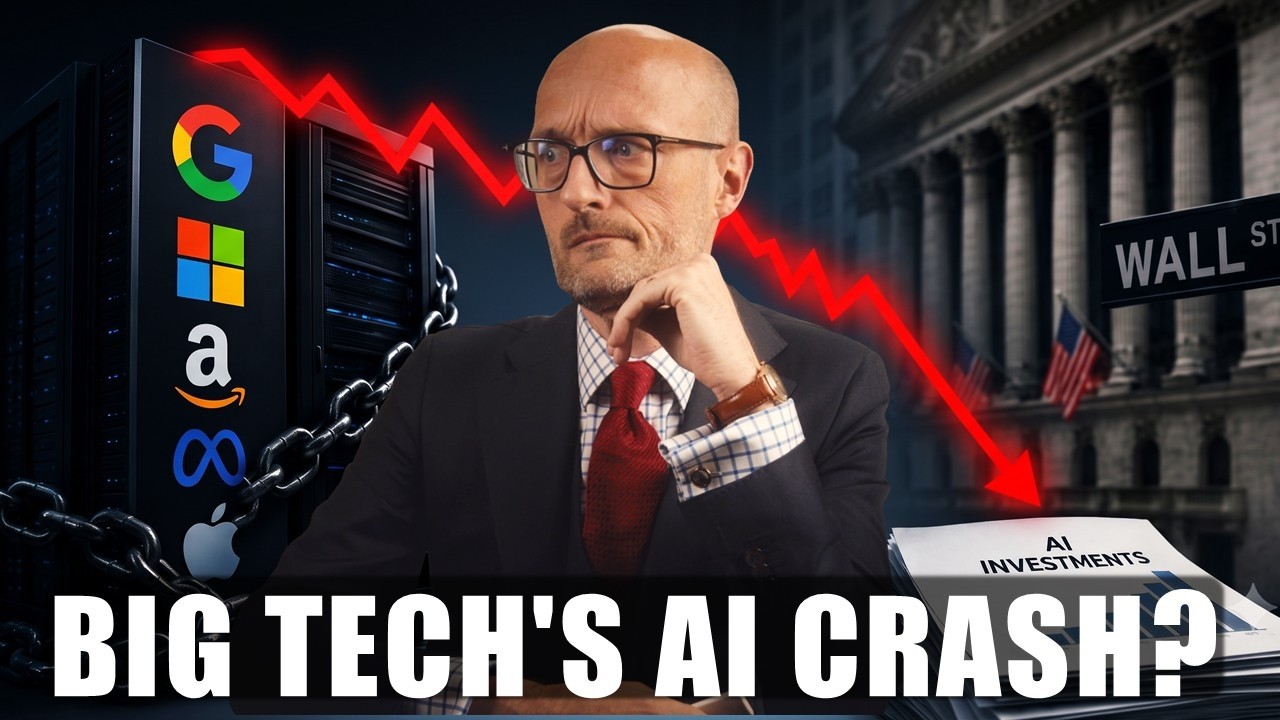
Title: The $1 Trillion Blind Spot: Why Wall Street Isn't Worried About Big Tech's Debt
Introduction In the world of high finance, a paradox is unfolding. The world’s largest technology companies—those with seemingly endless cash reserves—are quietly accumulating record levels of debt.
Introduction
In the world of high finance, a paradox is unfolding. The world’s largest technology companies—those with seemingly endless cash reserves—are quietly accumulating record levels of debt. Yet, despite this borrowing spree, the stock market remains remarkably calm. Analysts rarely flag these liabilities as a risk, and credit ratings remain pristine. Why is Wall Street choosing to look the other way?
The answer lies not in the size of the debt, but in the nature of the assets backing it. While this complacency appears justified by the numbers, a deeper look reveals a fragile assumption at the core of the market’s confidence.
The Numbers Behind the Calm
To understand the market’s nonchalance, one must first understand the scale of the borrowing. The "Magnificent Seven"—a group comprising Apple, Microsoft, Alphabet, Amazon, Nvidia, Meta, and Tesla—have collectively issued hundreds of billions of dollars in corporate bonds. This debt is used to fund share buybacks, finance data center construction, and fuel the artificial intelligence arms race.
However, the key metric that reassures investors is not the total debt, but the leverage ratio. Unlike traditional industrial companies, these tech giants generate staggering amounts of free cash flow. Their debt-to-EBITDA (earnings before interest, taxes, depreciation, and amortization) ratios remain incredibly low, often below 1.0. In contrast, a typical utility or manufacturing firm might carry a ratio of 3.0 or higher.
Because these companies print money, their ability to service interest payments is virtually guaranteed. Wall Street views this debt as "cheap capital" rather than a sign of distress.
The "Net Cash" Illusion
The primary reason for the market’s blind eye is the distinction between gross debt and net debt. Many of these firms hold massive war chests of liquid assets. For example, Apple and Alphabet have historically kept billions in cash and marketable securities.
When a company has $100 billion in cash and $110 billion in debt, the net debt is only $10 billion. This is a negligible figure for a company earning $100 billion annually. As long as the cash pile remains intact, the gross debt is viewed as an accounting footnote rather than a financial threat.
Where the Risk Actually Lies
The complacency, however, hinges on a single variable: the stability of earnings. The market is pricing these bonds as "risk-free" because it assumes the cash flows will remain constant.
This assumption is dangerous. The tech sector is currently engaged in a massive capital expenditure cycle. Billions are being poured into AI infrastructure that has yet to prove a return on investment. If this spending fails to generate revenue, or if a recession hits advertising and cloud spending, the cash flows could shrink rapidly.
In a downturn, a company with high gross debt and a shrinking cash pile loses its safety net. The "net cash" position evaporates, and the leverage ratio skyrockets. Wall Street’s current indifference is essentially a bet that the AI boom will continue without interruption.
The Verdict
Wall Street is not ignoring the debt because it is invisible; it is ignoring it because the current income statements make it look harmless. This is a rational response to the data at hand. However, it also represents a concentration of risk. The market has decided that "Big Tech" is too profitable to fail, and it is pricing that conviction into every bond and stock.
For the casual observer, the takeaway is clear: The market is not worried about the debt itself, but about the earnings that support it. As long as the profits flow, the debt is a tool. If the profits stop, the debt becomes a weapon. For now, Wall Street is betting the flow never stops.