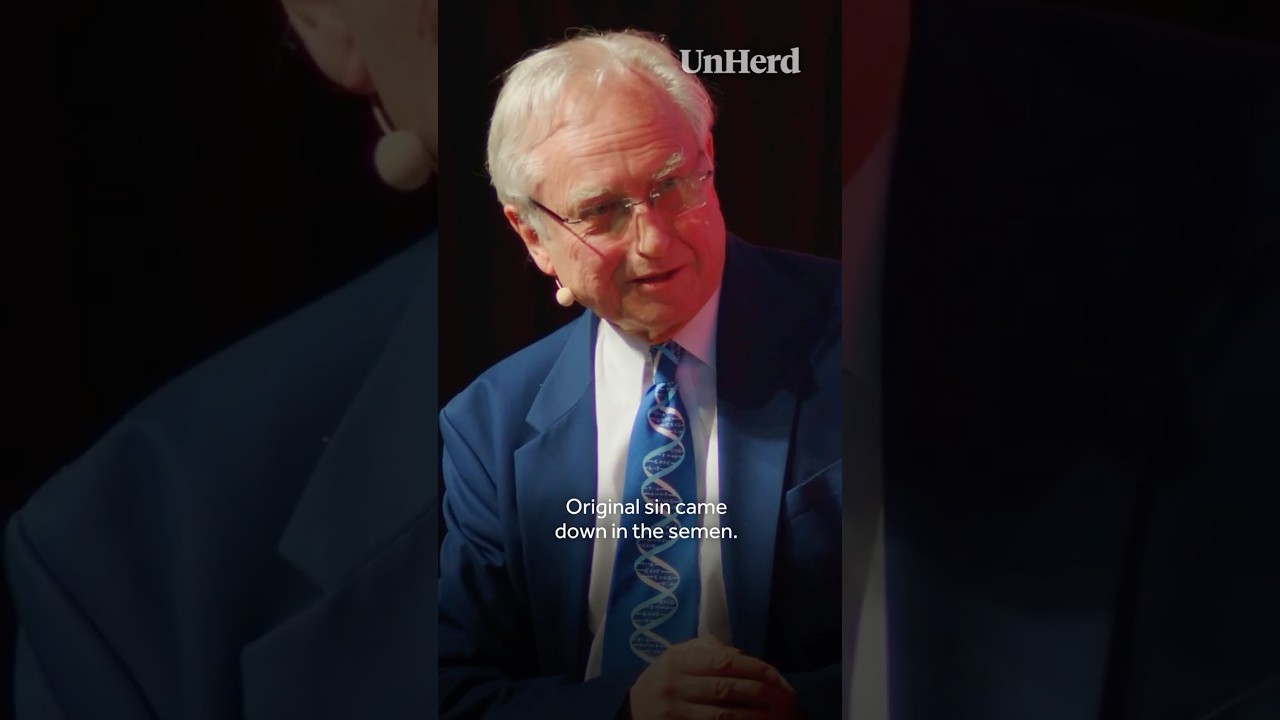
Title: Richard Dawkins: The Irreconcilable Clash Between Science and Theology
Introduction In a recent provocative statement, evolutionary biologist and renowned atheist Richard Dawkins has reignited the age-old debate between faith and reason. His blunt dismissal of theological arguments as "bullsh*t" is not merely a vulgar outburst, but a distillation of a philosophica
Introduction
In a recent provocative statement, evolutionary biologist and renowned atheist Richard Dawkins has reignited the age-old debate between faith and reason. His blunt dismissal of theological arguments as "bullsh*t" is not merely a vulgar outburst, but a distillation of a philosophical position he has championed for decades. For Dawkins, the conflict is not a misunderstanding between two complementary ways of knowing; it is a fundamental, irreconcilable opposition. This article dissects that position, clarifying why the scientific method and theological dogma, in his view, cannot coexist.
The Core Argument: A Zero-Sum Game
Dawkins’ central thesis is that science and religion are not separate "magisteria" (as the late Stephen Jay Gould argued) but are locked in a zero-sum game for explanatory power. He asserts that science, by its very nature, is a process of inquiry that demands evidence and welcomes revision. Theology, conversely, starts with a conclusion—the existence of a divine creator—and works backward to find justification.
This is not a matter of differing perspectives on the same truth. It is a direct conflict over the nature of reality. When a scientific theory is disproven, it is discarded. When a theological doctrine is challenged, it is often reinterpreted or defended through apologetics. For Dawkins, this asymmetry is the core of the problem.
The "God of the Gaps" Fallacy
The article’s transcript points to a common rhetorical strategy Dawkins frequently attacks: the "God of the Gaps." This is the practice of attributing any phenomenon that science has not yet explained to divine intervention. As science advances—explaining the origins of life, the mechanics of consciousness, or the fine-tuning of the universe—the "gaps" for God to occupy shrink.
Dawkins argues that this is not a sign of faith’s strength, but of its retreat. Every scientific discovery that fills a gap does not prove atheism, but it does render a specific theological claim obsolete. The theologian is forced to retreat to a smaller and smaller corner of ignorance. The ultimate insult to theology, in Dawkins’ view, is that it relies on the absence of knowledge to survive, whereas science thrives on the accumulation of it.
The Illusion of Metaphor
A common defense of religion is that its stories are metaphorical, not literal. Dawkins rejects this as intellectual dishonesty. If a religious text is entirely metaphorical, then it makes no testable claims about the world. It becomes a work of poetry or moral philosophy, stripped of its supernatural authority.
The problem, he contends, is that believers do not treat it as metaphor. They treat it as historical fact. When a scientist says "the universe is 13.8 billion years old," and a theologian says "the world is 6,000 years old," they cannot both be right. One is making a claim about physical reality; the other is making a claim that, if metaphorical, has no bearing on physical reality. To mix the two is to create a category error that undermines both disciplines.
A Matter of Intellectual Integrity
The harsh language used by Dawkins is deliberate. He views the deference given to religious belief as a form of intellectual cowardice. In any other field, a claim without evidence is met with skepticism. In religion, it is met with respect. This asymmetry, he argues, is a betrayal of the Enlightenment values that built the modern world.
For Dawkins, the universe is a place of profound beauty and complexity, but it is a beauty that is explained by physics and biology, not obscured by them. The feeling of awe one gets from a starry night is not diminished by knowing the nuclear processes that power the stars; it is amplified. Theology, by positing a supernatural designer, short-circuits this wonder, offering a simplistic answer to a question that is actually far more interesting. The "bullsh*t" is not the questioning, but the premature, unearned certainty.
Conclusion
Dawkins’ argument is not against spirituality or morality; it is against the intellectual authority of theological claims. He demands that religious assertions be held to the same standard of evidence as any other claim about the natural world. Until then, he maintains, the conflict between science and religion is not a dialogue—it is a war of attrition, and science is winning.