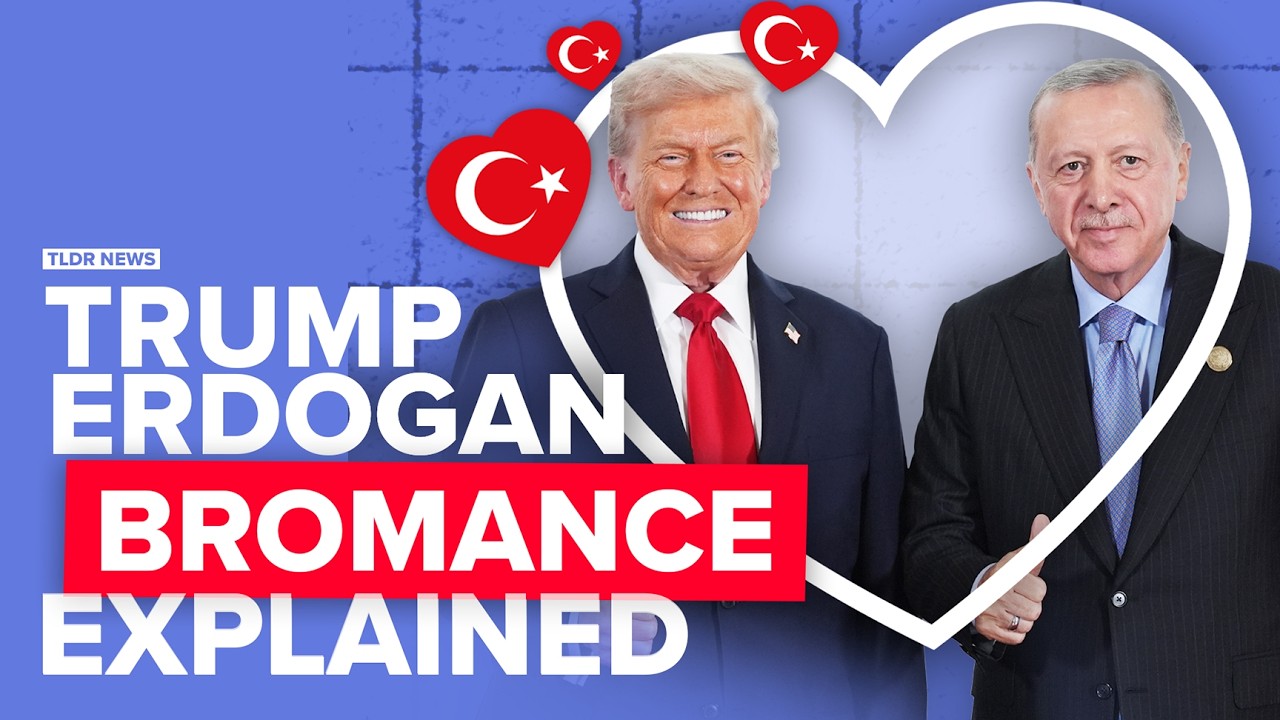
The Unlikely Alliance: Why Trump Admires Erdoğan
When Donald Trump was asked in 2019 why he had such a warm relationship with Turkey’s President Recep Tayyip Erdoğan, his answer was blunt: “I’m a realist. ” That brief remark hints at a deeper, more pragmatic calculus behind one of modern geopolitics’ most puzzling friendships.
When Donald Trump was asked in 2019 why he had such a warm relationship with Turkey’s President Recep Tayyip Erdoğan, his answer was blunt: “I’m a realist.” That brief remark hints at a deeper, more pragmatic calculus behind one of modern geopolitics’ most puzzling friendships. While many Western leaders have criticized Erdoğan for his authoritarian drift, Trump has consistently defended him—even after Turkey invaded northern Syria, purchased Russian missile systems, and jailed political opponents. To understand this bond, we must look beyond ideology and into the raw mechanics of power.
A Shared Playbook: Strongman Politics
At its core, the Trump-Erdoğan relationship is built on mutual recognition of a similar leadership style. Both men have centralized power, attacked independent media, and dismissed judicial checks. Trump has often praised Erdoğan’s ability to “get things done,” a phrase that resonates with his own frustration with institutional constraints.
Erdoğan’s 2017 constitutional referendum, which transformed Turkey from a parliamentary to a presidential system, concentrated unprecedented authority in his hands. Trump, who once remarked that Article II of the U.S. Constitution gives him “the right to do whatever I want as president,” found a kindred spirit. For both, democracy is less a system of checks and balances than a vehicle for personal rule.
Geopolitical Convenience: NATO’s Awkward Member
Turkey remains a critical NATO member, controlling the Bosphorus Strait and hosting the Incirlik Air Base, a key hub for U.S. operations in the Middle East. Trump, ever the transactionalist, valued this strategic leverage over concerns about human rights or democratic backsliding.
When Turkey bought Russia’s S-400 missile defense system—a direct threat to NATO security—Trump refused to impose sanctions mandated by U.S. law. Instead, he blamed the Obama administration for not selling Turkey American Patriot missiles earlier. The message was clear: loyalty to a personal ally outweighed institutional protocol.
The Erdoğan Business Network
Another underappreciated factor is the web of business interests connecting the two leaders. Trump’s real estate empire had longstanding ties to Turkish investors. In 2015, Trump’s company licensed its name to two luxury towers in Istanbul—a deal that generated millions in royalties. Although Trump later claimed to have divested from these holdings, critics note that his family continued to manage them.
Erdoğan, meanwhile, has used economic incentives to build political loyalty. Turkish businessmen with ties to the government have invested in Trump properties, creating a symbiotic relationship. For Trump, defending Erdoğan meant protecting his own bottom line.
Syria and the Kurdish Question
Perhaps the most concrete demonstration of Trump’s favoritism came in October 2019, when he withdrew U.S. troops from northeastern Syria, effectively greenlighting a Turkish invasion of Kurdish-held territory. The Kurds had been America’s primary allies against ISIS, losing thousands of fighters in the campaign. Trump’s decision—made after a phone call with Erdoğan—was widely condemned as a betrayal.
Trump justified the move by saying he wanted to “get out of the endless wars.” But critics argue he was simply accommodating Erdoğan’s long-standing goal of crushing Kurdish autonomy. The episode revealed a pattern: Trump prioritized Erdoğan’s security concerns over those of America’s own partners.
The Personal Chemistry
Diplomatic analysts often overlook the role of personal rapport. Trump and Erdoğan have met at least a dozen times, and their conversations are reportedly warm and informal. Trump has called Erdoğan a “friend” and praised him as a “tough man.” This contrasts sharply with Trump’s public feuds with other NATO leaders, such as Angela Merkel and Justin Trudeau.
Erdoğan, for his part, has skillfully flattered Trump. He visited the White House in 2019 bearing gifts—including a $2.5 million donation to a Trump-linked charity. In return, Trump hosted him with unusual ceremony, even allowing Erdoğan’s bodyguards to rough up protesters outside the Turkish ambassador’s residence.
The Cost of the Alliance
This friendship has not been without consequences. By refusing to pressure Erdoğan on human rights, Trump emboldened Turkey’s crackdown on journalists, academics, and political opponents. The U.S. also lost credibility with the Kurds and other regional allies who saw America as unreliable.
Moreover, Turkey’s purchase of the S-400 system led to its expulsion from the F-35 fighter jet program, weakening NATO’s technological edge. Trump’s leniency did not prevent Erdoğan from cozying up to Russia; instead, it allowed Turkey to play both sides against each other.
Conclusion: The Realist’s Dilemma
Trump’s admiration for Erdoğan is not rooted in shared values—it is rooted in a worldview that prizes strength, personal loyalty, and transactional gain over principles. For Trump, Erdoğan is not a democrat but a useful partner who delivers results. The tragedy is that this “realism” has undermined American interests in the long run, alienating allies and empowering a leader whose ambitions increasingly conflict with NATO’s goals.
As the next U.S. administration considers its relationship with Turkey, the Trump-Erdoğan saga offers a cautionary tale: when personal affinity replaces institutional strategy, even the most powerful nation can become a pawn in another leader’s game.
Related Coverage
Erdogan and Netanyahu’s War of Wills: 2 Armies, 1 Region, Zero Room for Compromise
Turkey’s opposition has dropped its domestic fight to back President Recep Tayyip Erdogan as the standoff with Israel over Syria and Gaza escalates, turning a personal rivalry into a strategic clash reshaping the Middle East.
Erdogan’s Secret Summit Talks: Can He Stop Trump from Sabotaging NATO?
As NATO leaders gather in Ankara this week, Turkish President Recep Tayyip Erdogan is holding secret talks with the alliance’s chief to finalize the summit agenda—while Washington calls the meeting the most important in NATO history and promises an unknown surprise.
Trump’s Syria Plan Baffles Mideast Leaders as He Suggests Assad Help Control Hezbollah
During recent peace talks, President Donald Trump surprised Middle Eastern leaders by repeatedly suggesting that Syria could help control Hezbollah in Lebanon, sparking confusion and reviving painful memories of past conflicts [186268]. The proposal, which has no clear backing from regional allies, comes as Gulf states express regret over trusting Trump’s earlier promises, with one former top supporter stating, “We got played” [181436].