Economy Grows 3.4% But Voters Furious Over Prices as 70 House Districts Draw $100,000+ Spending Each
A surging economy and rising voter anger collide as Americans head to the polls, with both parties pouring money into 70 battleground House districts while inflation fears and affordability concerns dominate the final stretch.
The U.S. economy grew at a solid 3.4% annual rate in the third quarter, according to the last major economic report before the midterm elections [9]. But that strong headline number masks a deepening anxiety among voters: consumer confidence has dropped sharply as inflation accelerates, job growth slows, and energy prices climb due to tensions in the Middle East [3]. For many families, the combination of high prices and slowing job growth has become the central concern heading into election day [3][9].
The political stakes are enormous. Both Democrats and Republicans are spending over $100,000 each on advertising in 70 House districts in the final days before the November 3 midterms, according to an NPR analysis [8]. The spending battle extends even into deep red areas, signaling where both sides see the most competitive fights [8]. The results will determine how much power President Donald Trump holds for the rest of his term, according to Anthony Zurcher [7].
The affordability crisis has become intertwined with questions of government accountability. Across the country, families struggle with rising prices while powerful interests profit from backroom deals, creating a political system that rewards insiders and leaves ordinary Americans behind [6]. For many voters, cleaning up government is no longer a side issue — it is the key to making life affordable again [6].
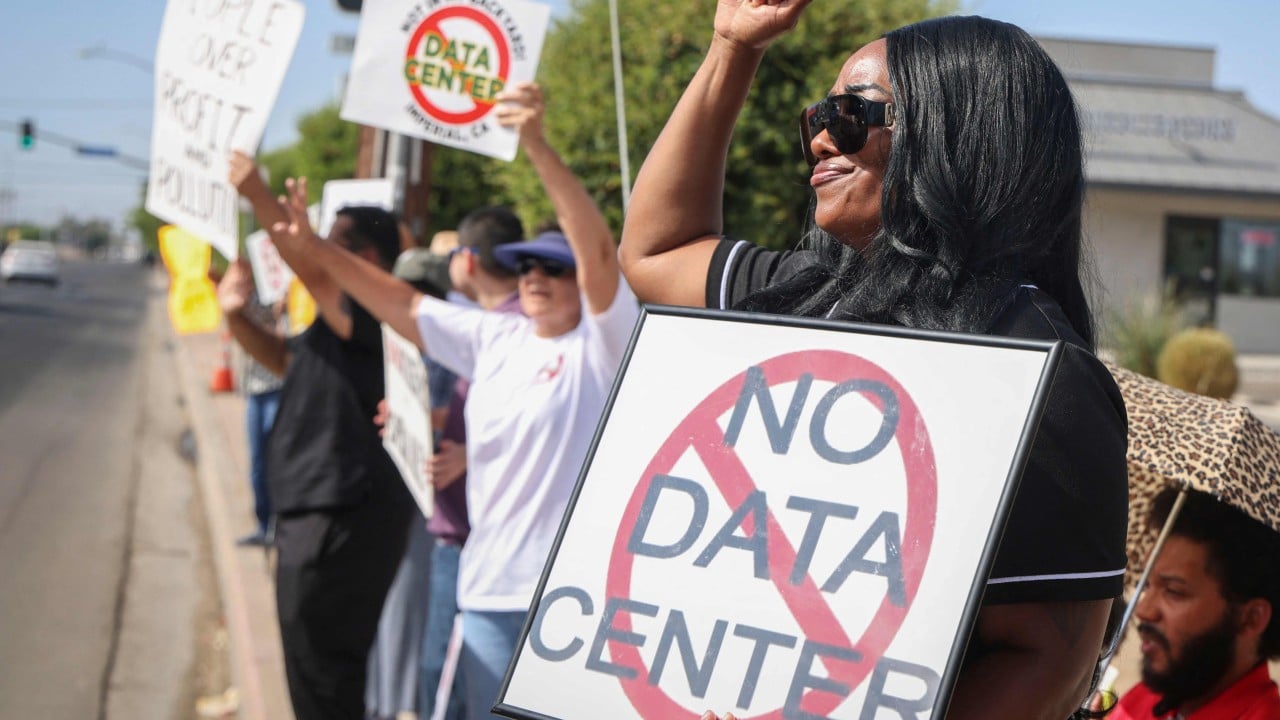
Meanwhile, the fight over artificial intelligence (AI) data centers is moving from local councils to the ballot box. Voters in 10 states will decide on election day whether to limit data center development in their communities, as the rapid buildout needed to power the AI boom sparks local opposition [1]. Resistance is especially strong in Ohio, where voters in more than a dozen jurisdictions will consider 21 proposals alongside Tuesday's midterm elections [1]. Brookings scholar Darrell West says public anger at the AI boom and tech companies is now crossing party lines, with voters from both sides asking the same question: who really benefits when massive data centers come to town? [4]
Democrats on congressional intelligence committees say they are preparing to check and respond to any claim by President Trump that foreign powers interfered in the November 3 midterm elections, though they say they have seen no sign of any country interfering with voting or vote counting [10]. The concern comes as Democrats lead by eight points among likely voters in the fight for control of Congress, according to an October 27 PBS News/NPR/Marist poll [10].
With midterm polls predicting a difficult outcome for Trump, he has tried a wide range of tactics to slow his decline — and even to cast doubt on the final result — including registering polling centers, redrawing districts, preparing custom-made censuses, and changing mail-in voting rules [5].
---