Florida Voters Put Environment Over Economy as Climate and Energy Costs Dominate Midterm Races
A new poll finds 61 percent of Florida voters want the environment prioritized over economic growth, as energy affordability, hurricane recovery, and climate policy shape key races across the country.
With midterm elections days away, environmental and energy issues are emerging as a decisive force in races from Florida to Maine, even as economic anxieties dominate the national conversation.
In Florida, a University of North Florida survey found that 61 percent of respondents want state and local officials to prioritize the environment, more than double the share who chose economic growth [273446]. The result surprised even the pollster who asked the question. The findings come as Florida's Senate race puts issues like data centers, power bills, and hurricanes in the spotlight [273446]. Florida's race for governor likewise offers voters a clear choice on climate policy: one candidate largely supports keeping the state's current environmental approach, while the other wants to renew a strategy focused on climate change and clean energy [272137].
Governors' races across the country could reshape America's energy and environmental policies for years, with the right governor able to put a state on a very different energy path [273445]. Democrats are favored to keep governorships in Arizona, Michigan, Pennsylvania, and Wisconsin, according to Sabato's Crystal Ball at the University of Virginia, and the party is also competing for other seats [273445].
In Maine, the Senate race between Republican Senator Susan Collins and Democratic challenger Troy Jackson, a former state Senate president, has become a referendum on how to keep homes warm and who can lower the bill. Across four October debates, each exchange followed roughly the same script: when Jackson brought up the high costs of heating a home with oil, Collins countered with the promise of cheaper electricity [273443].
The focus on affordability extends beyond heating bills. Black American voters are sending a clear message to elected officials that climate action means little without relief from rising costs, with concerns about utility bills, data centers, and pollution driving their demands [270215]. Many Black communities face high energy costs and nearby industrial pollution, and voters want officials to address those daily burdens first [270215].
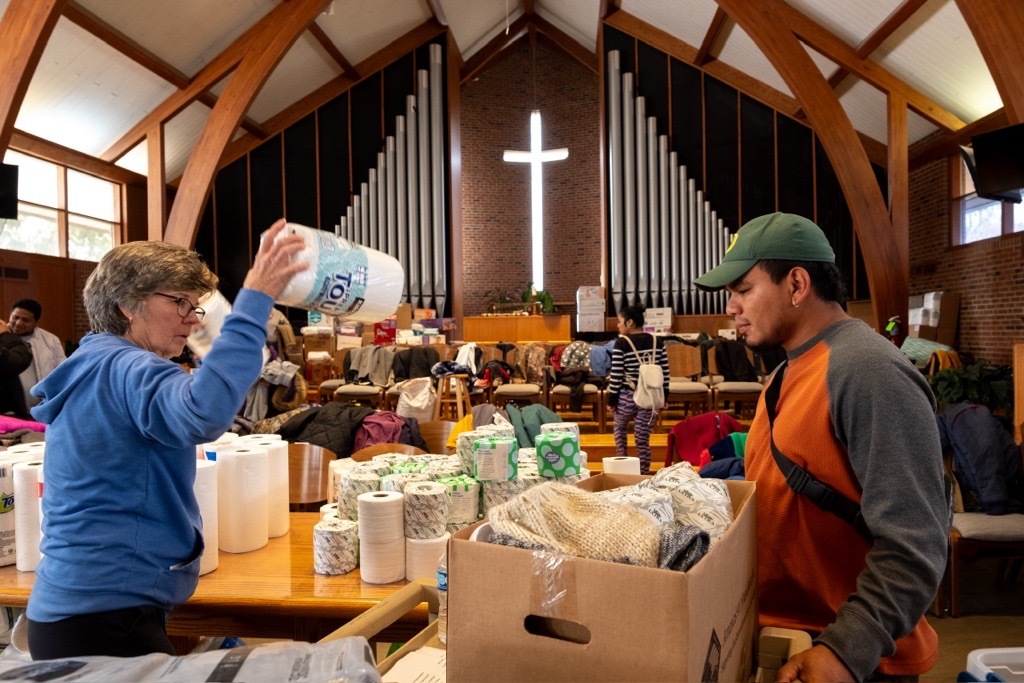
In North Carolina, two years after Hurricane Helene struck, recovery remains slow, and voters' frustration could carry a political price in the midterms [273450].
Nationally, voters are focused on inflation and high gas prices in the campaign's final stretch [273148]. President Donald Trump has sharply reduced regulations on methane emissions from oil and gas operations as his administration seeks to lower energy costs before the elections, with voters angry about soaring fuel prices driven higher by the conflict with Iran [272940].
In Iowa, heavy rain delayed the harvest by almost three weeks, and top Trump administration officials—Agriculture Secretary Brooke Rollins, Environmental Protection Agency Administrator Lee Zeldin, and Vice President J.D. Vance—have all visited the state in the past month with a message that the administration is working on fuel policies meant to help farmers, as Republicans prepare for midterms in which rural support could prove decisive [272140].
Meanwhile, the Federal Election Commission's campaign finance system went offline days before the elections after hackers reportedly targeted the site, raising concerns about the security of financial disclosures during a critical voting period. The outage comes as political ad spending and reservations for the 2026 cycle have topped $11.2 billion, according to AdImpact [273195].