Egypt Won't Send Troops to Yemen, Sisi Tells Parliament as Military Debate Delayed
Egypt's president draws a clear line: defend Saudi Arabia if attacked, but keep Egyptian forces out of Yemen. Parliament postpones its decision on military support as Cairo navigates regional pressures.
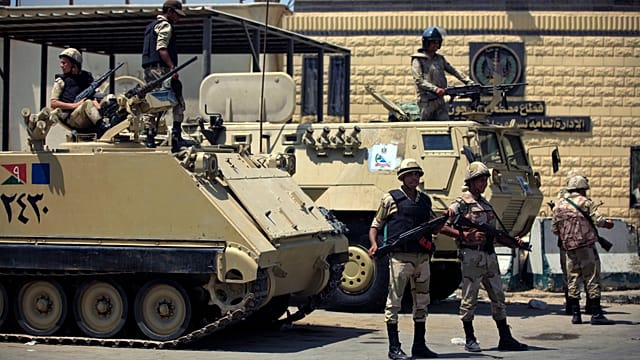
Egyptian President Abdel Fattah el-Sisi has asked parliament to authorize military support for Saudi Arabia, but insists the mandate is strictly defensive and will not involve offensive operations inside Yemen, as lawmakers postponed their debate on the request until next week [266606][269123].
The head of Egypt's Foreign Affairs Committee, Sameh Shoukry, reinforced the position in a television interview, saying Egypt's mandate to defend Saudi Arabia "does not mean it will launch offensive military operations inside Yemen" [270404]. Sisi himself framed the commitment plainly: Egypt will defend Saudi territory if it is attacked but will not send forces into Yemen, drawing a clear line between defensive support for Riyadh and direct involvement in the conflict [267831].
Sisi has asked parliament to authorize support for Riyadh and its war against Yemen's Iran-backed Houthi rebels "if requested" [269123]. An emergency parliamentary session on Sunday ended without a decision, and state media reported the debate was pushed to next week [266606].
The deliberations come as regional security dynamics shift. Turkish Foreign Minister Hakan Fidan and his Qatari counterpart, Sheikh Mohammed bin Abdulrahman Al Thani, held a phone call to discuss Gulf security and ongoing diplomatic negotiations, focusing on regional stability and the progress of current talks [270377].
In a separate development, four major Muslim nations—Turkey, Pakistan, Indonesia and Qatar—agreed to a new defense pact that complements the existing Mecca alliance, a security coalition among Islamic countries. The agreement deepens military cooperation among the signatories, though details of specific commitments and timelines have not been publicly released [269560].
Meanwhile, China and Djibouti expressed "serious concern" over threats to shipping in the Red Sea in a joint statement that increases diplomatic pressure on the issue, though it did not propose solutions to stop the attacks [269651].
On the economic front, Egypt is moving to accelerate the connection of Cypriot gas to its infrastructure, Petroleum Minister Karim Badawi said, adding that Cairo aims to strengthen cooperation with French energy company Total Energies to advance exploration, development and production in the Mediterranean [269165].
Egypt's water dispute with Ethiopia also remains unresolved. Water Resources and Irrigation Minister Hani Sewilam said Cairo has exhausted all negotiation paths in the Grand Ethiopian Renaissance Dam dispute, stating that Egypt's policy showed patience and endurance but received no response from Ethiopia that would lead to an agreement [269161].