Poor Countries Get Squeezed Twice as Food Prices Soar, and Rate Hikes Can't Fix It
Emerging economies are caught in a lose-lose trap: inflation keeps climbing, but the usual fix of raising interest rates only makes things worse. Meanwhile, farmers from Xinjiang to Japan are being crushed by forces beyond their control.
When food and fuel prices rise in poorer countries, central banks face an impossible choice. Raising interest rates is the standard tool to cool inflation, but in emerging markets, this approach backfires badly [254099].
Higher rates attract foreign investors chasing better returns. That money flows in, strengthens the local currency, and creates new problems. A stronger currency hurts exports, making goods more expensive abroad. It also increases the real value of dollar-denominated debt, squeezing governments and businesses that borrowed in foreign currency [254099].
The cruel irony is that inflation in these countries often stems from imported goods—food and fuel—not from domestic demand. Rate hikes simply cannot fix supply-driven price shocks [254099].
Wealthy countries like the United States can raise rates aggressively with limited fallout because their currencies are global reserves and their debt is in their own money. Emerging economies have no such protection [254099].
The result is a widening gap. Rich nations fight inflation with powerful tools. Poorer nations watch prices climb while their options shrink [254099].
Farmers Are Being Hit From Every Direction
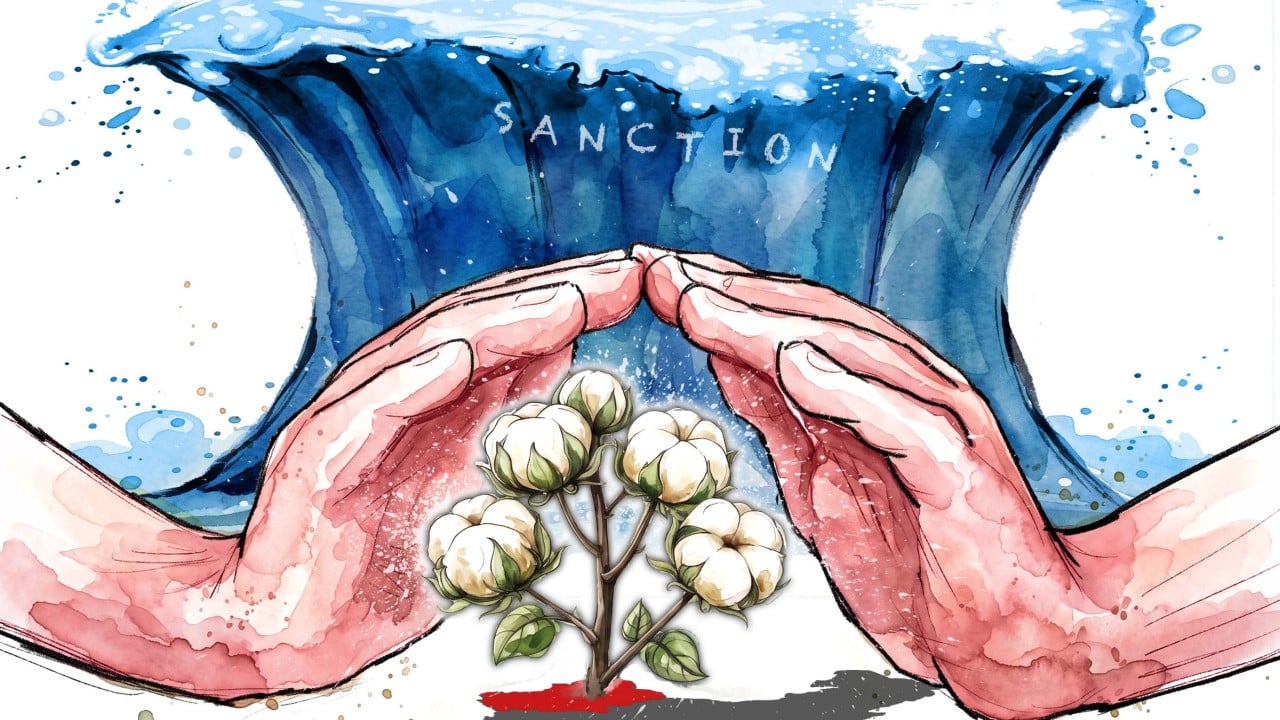
The pressure on food producers is mounting worldwide. In China's Xinjiang region, US sanctions have forced cotton farmers to overhaul how they work. The changes have helped them survive, but at a steep cost [254109].
Awati county is a cotton hub where fields were almost ready for October harvest. Yusup Molamaiti, a 36-year-old technician, remembers the old way: planting and harvesting 37 mu (about 2.5 hectares) of scattered plots by hand. "Planting a single mu took up to three hours with two people laying plastic film by hand," he said. Harvesting kept his family busy all year and produced only 250-300kg per mu [254109].
Today, his farm looks different—but the transition has not been easy [254109].
In Japan, rice farmers face the opposite problem. The market has swung from shortage to surplus in just one year. Last year, the government released emergency stockpiles to lower soaring prices. Now, there is too much rice [252935].
For consumers, falling prices are welcome news. For farmers like Hiroshi Asano, 59, who farms 38 hectares in Chiba near Tokyo, it is a disaster. He expects to lose money this year and worries smaller farms will not survive the downturn [252935].
In Malaysia, poultry farmers are struggling to keep chickens healthy as haze and extreme heat reduce egg production. The combined pressure of smoke, heat, water shortages, feed problems, and disease is badly hurting animal health, productivity, and farmers' finances [251817].
In Selama, Perak, poultry keeper Zaiful Zakaria, 42, has begun installing equipment to cool his coops—an added cost in an already tight business [251817].
The Squeeze on Workers and Families
The stress extends beyond farms. In the United States, a new warning says deep cuts to SNAP, the food assistance program, could push more children into foster care. Sandy Santana and Kristen Weber of the National Center for Youth Law argue that cutting aid makes families poorer, and then the system punishes those same families for being poor [253496].
"We should not make families poorer and then punish them for their poverty," they wrote. When parents cannot afford basic needs like food, children are more likely to be removed from their homes. The message is simple: cutting food aid may not save money—it may cost families their children [253496].
Poland's support for Ukraine is also cracking as farmers and truckers face falling prices from an influx of Ukrainian goods and transport competition. Historical memory disputes add more strain, and trust between the two nations is fading [254052].
A System That Punishes the Poor
From Xinjiang cotton fields to Japanese rice paddies to Malaysian chicken coops, farmers are being squeezed by sanctions, market swings, and climate pressures they did not create. Meanwhile, in poorer nations, policymakers face a lose-lose choice: raise rates and risk recession, currency swings, and debt stress—or hold steady and watch inflation erode living standards [254099].
Rich countries fight inflation with powerful tools. Poorer nations watch prices climb, their options shrinking [254099]. And the farmers who feed everyone are left to adapt, at a cost [254109].