Drone Attacks Hit 3 NATO Countries and Black Sea Ships as Russia and Ukraine Target Each Other's Economies
Russia's war on Ukraine is spilling across borders, with drone crashes and airspace alerts hitting three NATO countries while both sides strike economic targets.
Poland, Romania, and Moldova are now regular targets in Russia's war against Ukraine, as drone explosions, airspace violations, and arson attacks hit these countries and more governments call the attacks deliberate acts of aggression [251084]. A Washington think tank says three separate incidents in Eastern Europe are part of one Russian campaign. The Institute for the Study of War (ISW) links drone crashes in Moldova and Romania, a fire at a Starlink station in Poland, and a shutdown at a Berlin airport, calling this a single pattern of Russian pressure on European defense infrastructure [249853]. Starlink is a satellite internet service owned by Elon Musk's company SpaceX [249853].
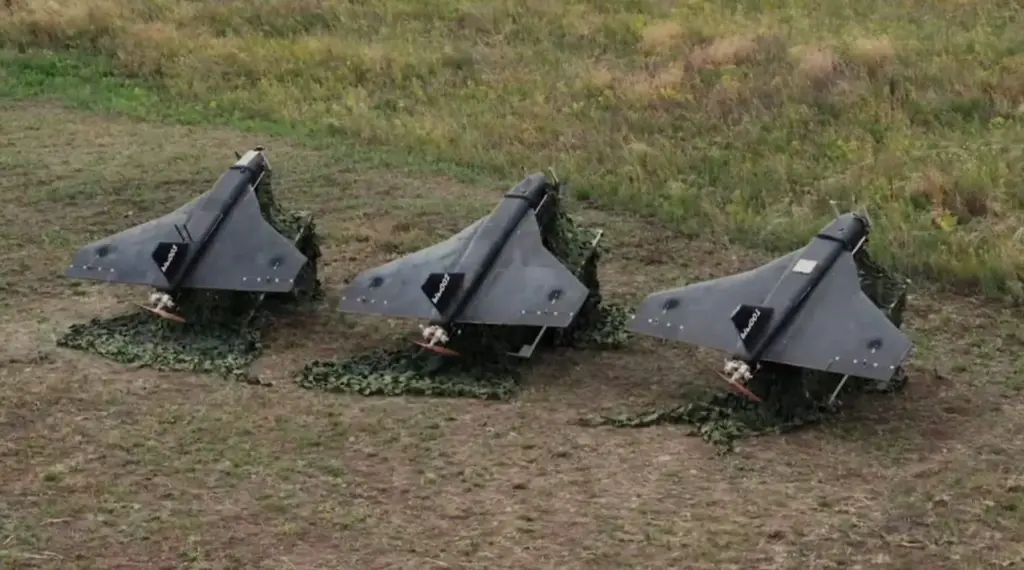
A drone exploded next to a farm in Moldova, prompting police to put three countries on alert. Police preliminarily identified the drone as a camera-equipped Gerbera, the first drone of its type found in the country [249862]. Two Spanish F-18 fighter jets were scrambled after Romania detected a drone flying near its border with Ukraine, Romanian officials said. Romania's radar surveillance system spotted an "aerial target" moving near the Ukrainian town of Vâlkove, close to the Romanian border, during the night of September 25-26. The two Spanish jets, stationed at Romania's 57th Air Base Mihail Kogalniceanu as part of NATO's reinforced Air Policing mission, took off to monitor the situation. Romania reported no incursions into its airspace [250581]. The incident marks the second such activation in days, and Spanish forces in Romania have recorded 18 alerts from August through September [250581].
At sea, Russia struck a second civilian ship in the Black Sea in six days. The attack killed both captains, set the vessel on fire, and triggered a rescue operation for the surviving crew. The route carries 90 percent of Ukraine's farm exports [249851].
The war is shifting toward attacks on energy, transportation, and export infrastructure, according to Andrew Kramer, the New York Times Kyiv bureau chief. Kramer said Ukraine is using its growing drone arsenal to strike Russia's oil industry, aiming to weaken Russia's ability to pay for a long war. Both sides are now trying to damage the economic systems that keep the fighting going [251345]. Russia's registered fleet has expanded by one-third as Moscow continues shipping fossil fuels despite Western sanctions, allowing crude oil and gas exports to keep flowing to buyers abroad [249575].
Ukraine's President Volodymyr Zelensky says Russia is attacking Ukraine's data centers to disrupt everyday life and break "people's ability to stay connected, study, work." Data centers are buildings that store computer servers, powering internet access, mobile networks, and online services. Zelensky says the attacks are part of a wider Russian campaign against civilian infrastructure [250835]. Russia also launched ballistic and hypersonic missiles at Kyiv, damaging a maternity hospital, as the United States led efforts to secure a halt to attacks on energy infrastructure [249867].