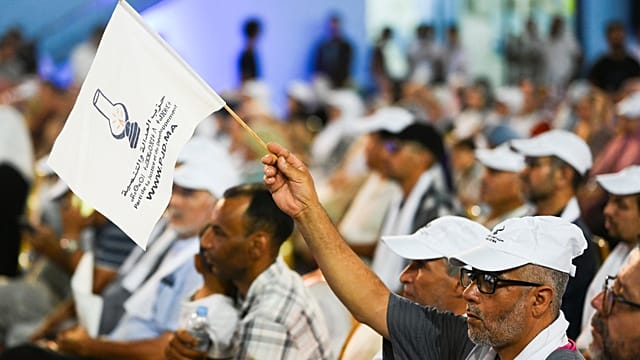
Morocco’s Ruling Party Wins 97 Seats as Just 38% of Voters Show Up
Morocco's parliamentary election saw the Authenticity and Modernity Party take the most seats, but record-low turnout underscored deep voter disengagement.
Morocco's parliamentary elections ended with the centre-right Authenticity and Modernity Party (PAM) winning the most seats, but only about 38 percent of registered voters cast ballots — the lowest turnout in 20 years [249309][249211]. The result highlights a growing disconnect between politicians and the public in the North African country [249195].
The PAM, a liberal group in the outgoing government coalition, took 97 of 395 seats in Parliament, Interior Minister Abdelouafi Laftit announced nearly nine hours after polls closed [249309]. The party defeated its coalition partners: the National Rally of Independents (RNI) dropped to second place with 66 seats, and the nationalist Istiqlal party held third with 65 seats [249309].
Only 38.08 percent of registered voters participated, with about six million of Morocco's 15.8 million registered voters casting ballots [249309]. The low participation rate raises questions about public engagement with the political process [249211]. Turnout has been low in every election for the past 25 years, with the highest abstention rate since King Mohammed VI took the throne reaching 63 percent in 2007, followed by 57 percent in 2016 [249309].
The PAM was founded in 2008 by allies of King Mohammed VI, including his former schoolmate Fouad Ali El Himma [249309]. For the past two months, it has also been the party of Fouzi Lekjaa, the budget minister and president of Morocco's football federation [249309]. Analysts expect Lekjaa to play a major role in the new legislature, which will focus on the 2030 World Cup that Morocco will co-host with Spain and Portugal [249309].
The biggest surprise was the moderate Islamist Justice and Development Party (PJD), which won 54 seats [249309]. Five years ago, the PJD collapsed from 125 seats to just 13, ending a decade of electoral dominance that began after the 2011 protests [249309]. The left also celebrated gains, winning eight seats despite its small presence in Moroccan politics [249309].
Voters went to the polls amid concerns about the cost of living, jobs, and inequality, with many saying they deeply distrust political parties [249220]. The election was the first vote since youth-led protests spread across the country in late 2025, with all eyes on young voters whose turnout could shape the result [246769].
Seats are allocated based on registered voters in each district, not valid votes cast [249309]. This system favors fragmentation and makes absolute majorities unlikely [249309]. Local analysts say the current coalition — PAM, RNI and Istiqlal — will probably continue, with the liberals holding more power [249309].
After official results are published, the king will name a new prime minister from the PAM, the party that finished first [249309]. Analysts say Lekjaa is the favorite, though the party has a collective leadership that includes Housing Minister Fatima Ezzahra El Mansouri and Youth and Culture Minister Mehdi Bensaid [249309].