BRICS Just Pulled 11 Nations Together Against Trump’s Tariffs — But the Photo Hides a Messy Fight
BRICS leaders met in New Delhi and agreed to push back against US tariffs and sanctions. But deep splits over Iran, the dollar, and what comes next show unity is still fragile.
The BRICS group of major emerging economies wrapped up its summit in New Delhi this week with a rare show of agreement: a joint declaration opposing US tariffs, condemning unauthorized sanctions, and calling for "maximum restraint" in the Iran war [240243][240254][240867].
The meeting marked the first in-person BRICS summit since the COVID-19 pandemic and the first since the bloc invited new members to join [238894]. BRICS originally stood for Brazil, Russia, India, China, and South Africa. It has now expanded to 11 nations spanning four continents and nearly half the world's population, including new members such as Iran [241282].
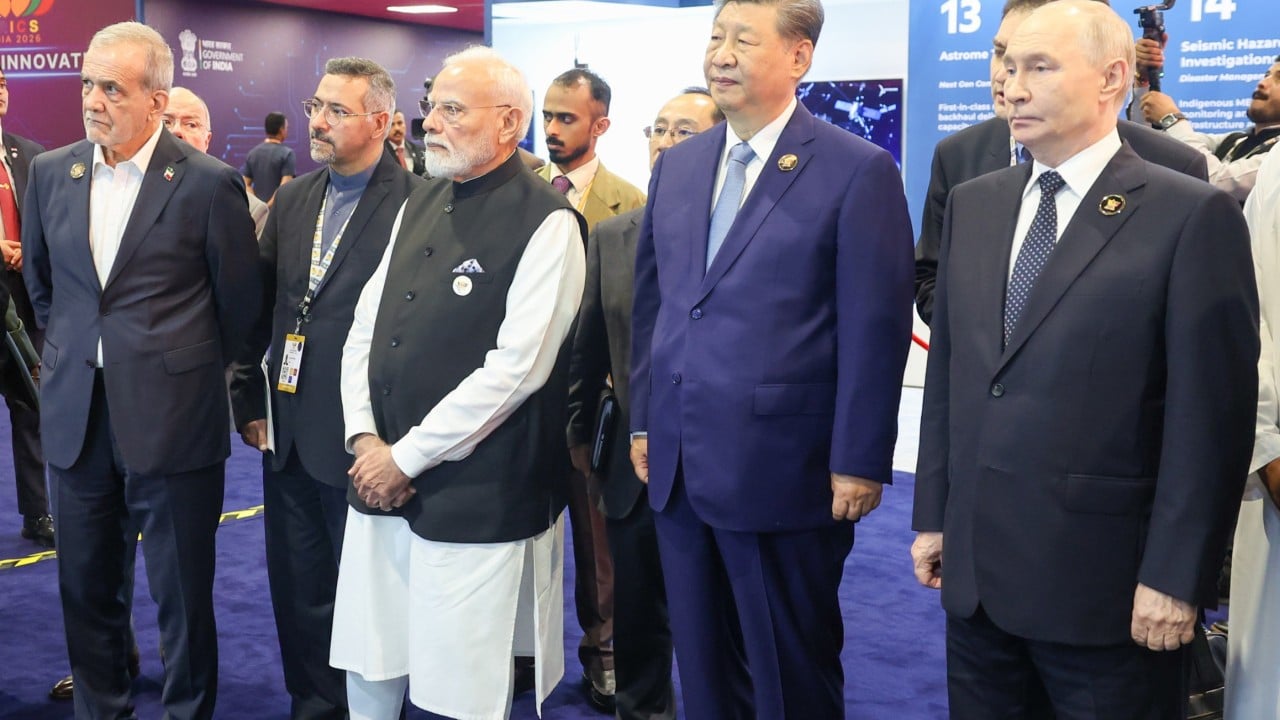
The summit's closing image — Chinese President Xi Jinping, Russian leader Vladimir Putin, Iranian President Masoud Pezeshkian, and Indian Prime Minister Narendra Modi standing shoulder to shoulder — was designed to project unity [241282]. But behind the photograph, the group's divisions remain deep.
A shared target, different reasonsWhat brought members together was a common frustration with American economic pressure. Worries about US tariffs, sanctions, and a Gulf war pushed the group toward a shared position, with "Trumpism" — the hardline policies linked to former President Donald Trump — driving rival nations closer [240243].
The joint declaration condemned the use of sanctions not authorized by the United Nations and voiced concern over rising Middle East tensions [240867]. On the Iran war, BRICS called for dialogue and a political solution, though it did not name any country or side — a reflection of how differently members view the conflict [240254].
India, which is hosting the summit, worked to build agreement among the expanded group even as members hold very different positions on the Iran war and relations with the United States [239653].
The dollar questionDespite speculation, BRICS is not trying to replace the US dollar. Instead, members aim to protect themselves from its dominance [241282]. Some face heavy US sanctions. Others want to reduce reliance on Western financial systems. These different motivations limit how far the group can act together [241282].
The broader question — what should replace the current global order and how to get there — remains unanswered. Members agree they need something new, but struggle to define it [240218].
Xi offers AI help, Modi warns on mineralsOn the summit's final day, Xi ended his short trip to India with an offer to help BRICS members build open-source artificial intelligence and smart manufacturing [240282].
Modi, the summit host, warned against turning technology and critical minerals into economic weapons [240282].
The exchange captured the wider picture: two days of diplomacy produced a united front against US tariffs, sanctions, and "America first" pressure, along with a joint declaration [240282]. The summit also drew attention to a tentative warming of ties between India and China, with China Southern Airlines preparing to restart its Guangzhou–New Delhi route after a six-year suspension [239653].
The limits of unityThe summit tested whether a larger BRICS can still speak with one voice. Member nations have different interests and ties to other powers, making agreement harder [238894].
UN Secretary General Antonio Guterres attended the gathering [241282].
For now, the group has shown it can agree on opposing external pressure. Whether it can turn its growing size into real clout — or whether expansion brings more division than strength — remains an open question [238894].