Oil Nears $100 as Iran Blockade, Gulf Attacks, and Fuel Shortages Rock Global Markets
Oil prices are surging toward $100 a barrel as the U.S. blockade of Iran pushes the region to the brink of war, with fresh military strikes and attacks on Saudi energy sites compounding supply fears. Fuel shortages are now spreading across Iran and Iraq, while European gas prices have hit a 3.5-year high due to Gulf liquefied natural gas (LNG) disruptions.
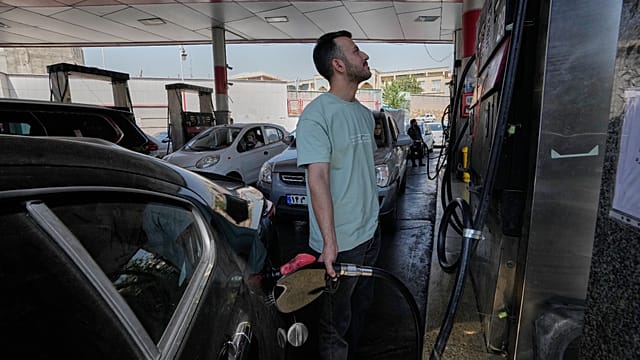
Washington has abandoned diplomacy with Tehran, tightening sanctions and cutting off Iranian oil exports and banking channels [238005]. President Donald Trump dismissed a June ceasefire agreement as one that “isn’t worth the paper it’s written on,” leaving Tehran to see escalation as its only remaining leverage [238005]. The pressure campaign has pushed Iran’s economy to the breaking point, with authorities now cutting petrol subsidies for heavy users and long lines forming at fuel stations across the country [237946][232861].
The supply crunch extends beyond Iran. Iraq, despite sitting on vast crude reserves, is facing a gasoline shortage because conflict has cut off its import routes, leaving drivers in Baghdad waiting hours for fuel [236888]. In the Strait of Hormuz—a chokepoint for roughly a fifth of the world’s oil—traffic is grinding to a near standstill, and Tehran says it is finalizing a deal with Oman to open a temporary safe passage [237952][237865]. Iran also announced its naval forces captured an American unmanned submersible in the strait, though the U.S. military has not yet confirmed the claim [237865].
Brent crude is climbing toward $100 a barrel after fresh U.S.-Iran military exchanges and attacks on Saudi Arabia’s energy infrastructure raised fears of supply disruptions in a region that provides about a third of global crude [237682][237773]. European benchmark natural gas prices jumped 4.5% to $89.10 per megawatt-hour, the highest in over three and a half years, as severe disruptions to Gulf LNG shipments squeeze the market [237989].
The U.S. military still has enough firepower for major operations, but its supply of advanced interceptor missiles is under strain, according to Bloomberg Intelligence Senior Defense Analyst Col. Wayne Sanders [236747]. Manufacturers are being pushed to sharply increase output to rebuild stockpiles stretched thin by recent deployments [236747].
Analysts say Iran’s six months of direct confrontation with the U.S. have reshaped its strategic outlook, with Tehran now believing it has measured the limits of American power [235317]. Iranian leadership has moved from defensive caution to calculated confidence, making future negotiations or confrontations likely to start from a different baseline [235317].