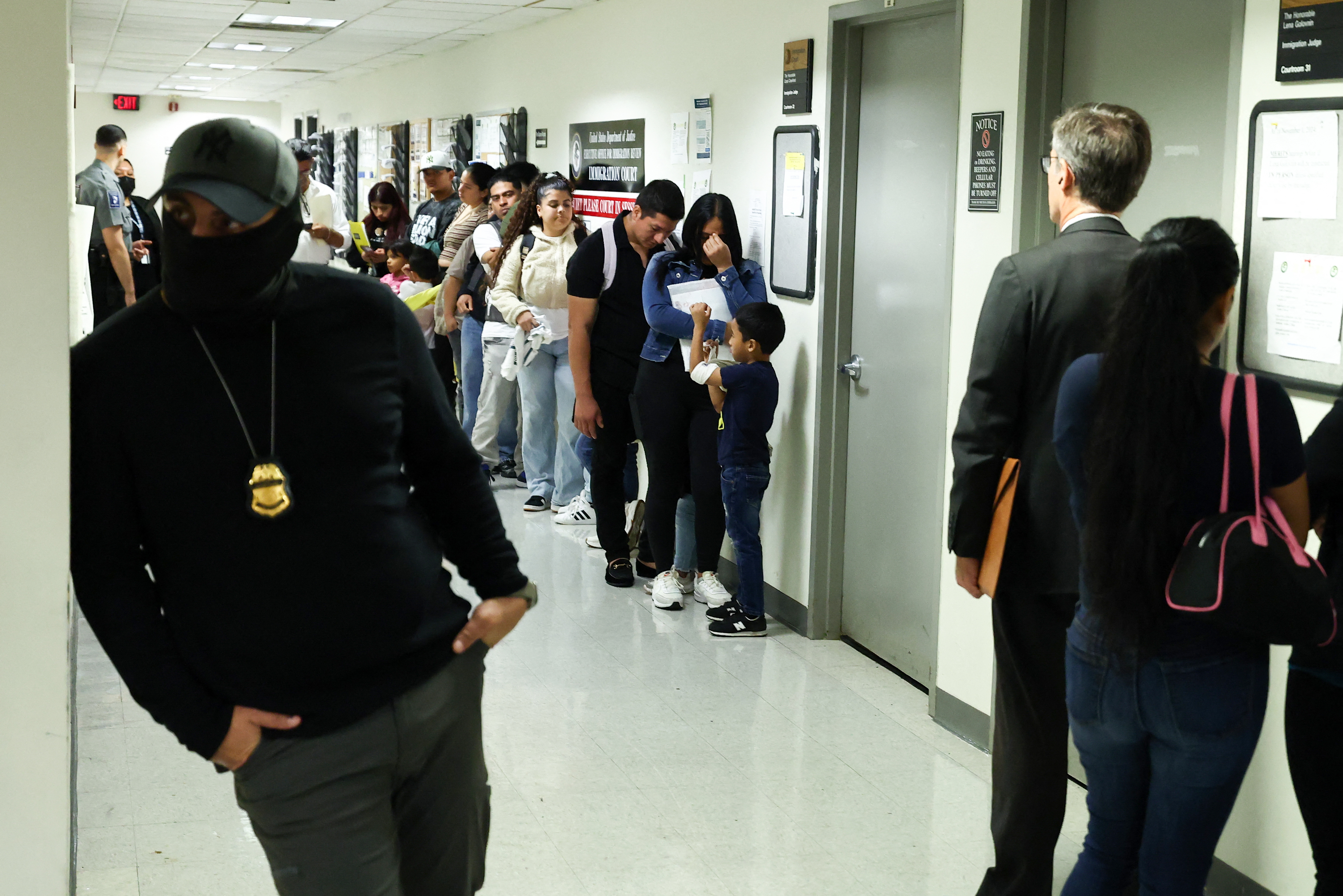
Trump Admin’s “Hidden Tribunals” Push Deportations — Critics Say Due Process Is Dead
The Trump administration is quietly opening new immigration court locations that critics are calling “hidden tribunals,” part of a broader push to speed up deportations and strip immigrants of legal options.
The new courts will hold hearings in facilities that are not traditional courthouses, often far from major cities where lawyers and advocates are based [235282]. This makes it harder for immigrants to find legal representation or even attend their own hearings [235282]. Supporters argue the change will cut into a massive case backlog and remove undocumented immigrants faster, but opponents warn it short-circuits the limited due-process protections that remain [235282].
At the same time, the Department of Homeland Security (DHS) has ordered its Immigration and Customs Enforcement (ICE) lawyers to ask judges to throw out asylum claims they deem legally weak before those cases ever reach a full hearing [233914]. Under the new directive, ICE attorneys must file motions for early dismissal when they believe an asylum request is legally insufficient, allowing a judge to decide the case on written arguments alone [233914]. Supporters say this speeds up justice for valid claims and saves resources; critics warn it could deny applicants a fair chance to tell their story in court [233914].
The push extends beyond U.S. borders. The administration is expanding a strategy called “third-country deportations,” sending immigrants to nations where they have no prior ties rather than back to their home countries [230654]. The program is already active, with immigrants being flown to countries across Latin America, Africa, and Asia [230654]. Critics argue the system is risky, leaving immigrants facing unknown legal systems, language barriers, or even danger, while supporters call it a necessary tool for enforcing U.S. immigration law [230654].
The courts and deportation push comes amid a broader crackdown that has raised questions about fairness and oversight [235282][230654]. Legal experts say the result is a court process that is faster—but far less fair [235282].