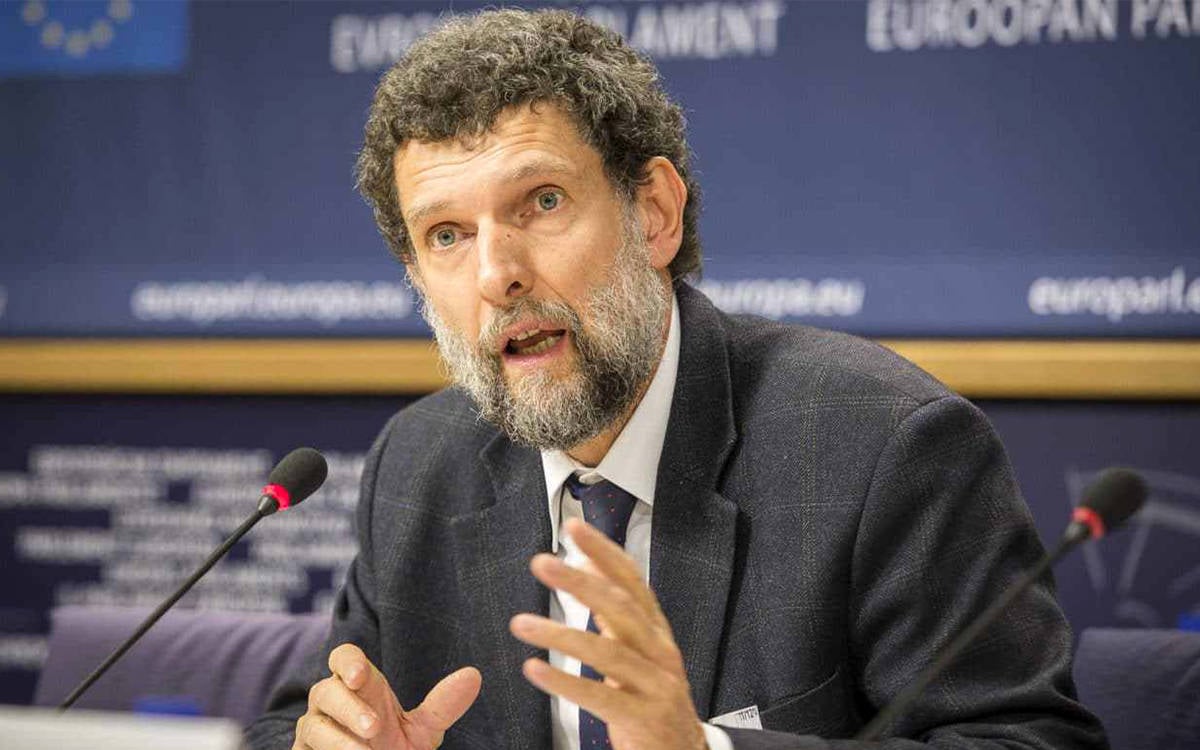
Turkey's Top Court Orders Release of Activist Osman Kavala, But Ankara Refuses to Comply After 7 Years
The European Court of Human Rights has issued a final, binding ruling ordering Turkey to immediately release businessman and civil society activist Osman Kavala, who has been imprisoned since 2017 without a final conviction, but Turkish authorities continue to resist the decision.
The European Court of Human Rights (ECHR) delivered its final Grand Chamber judgment on Tuesday, finding that Turkey violated Kavala's rights to liberty, security, free expression, and freedom of assembly, and that his aggravated life sentence without parole amounts to inhuman treatment [227140]. The court ordered Turkey to secure Kavala's release at the earliest possible date and to erase the legal consequences of his conviction [227136].
Kavala, a Turkish businessman and philanthropist, has been in custody for over six years. He was acquitted in 2020 but was not freed, and in 2022 a Turkish court sentenced him to life in prison without parole on charges linked to nationwide protests in 2013 and a failed coup attempt in 2016, all of which he denies [227140].
Rıza Türmen, a former judge at the ECHR, warned that Turkey has no choice but to comply with the ruling. "If Turkey has the slightest connection to the rule of law, it must implement this ruling," he said [228340]. Kavala himself stated that compliance with ECHR rulings is "primarily about fulfilling the state's obligation to its citizens under the rule of law" [229471].
Kavala's lawyers, Başak Çalı and Philip Leach, called on Turkish authorities to enforce the ruling immediately, saying the decision must end a "grave injustice" [227124]. Turkey's main opposition leader, Özgür Özel, also demanded Kavala's release, noting that authorities have "repeatedly ignored the Constitutional Court's rulings" and are still resisting the ECHR's second judgment [227133].
Legal experts say the ruling is more than a single verdict—it lays out legal standards that address systemic problems in Turkey's justice system, from prolonged pretrial detention to the use of courts to silence dissent [228360]. However, the ECHR has no army or police to enforce its decisions. Its most powerful tool is public exposure—naming the offending state before the world and declaring that it has broken its commitments [229483].
Kavala remains in prison despite the binding ruling, leaving Turkey's compliance with international human rights standards in question [227136].