Syria Flirts With ‘Mecca Pact’ After Israeli Strikes — But Only If US Deal Fails
Syria is weighing joining a new defense pact between Pakistan, Saudi Arabia, and Turkiye if Washington cannot deliver a security deal with Israel, as Israeli air strikes push Damascus closer to Ankara and Riyadh.
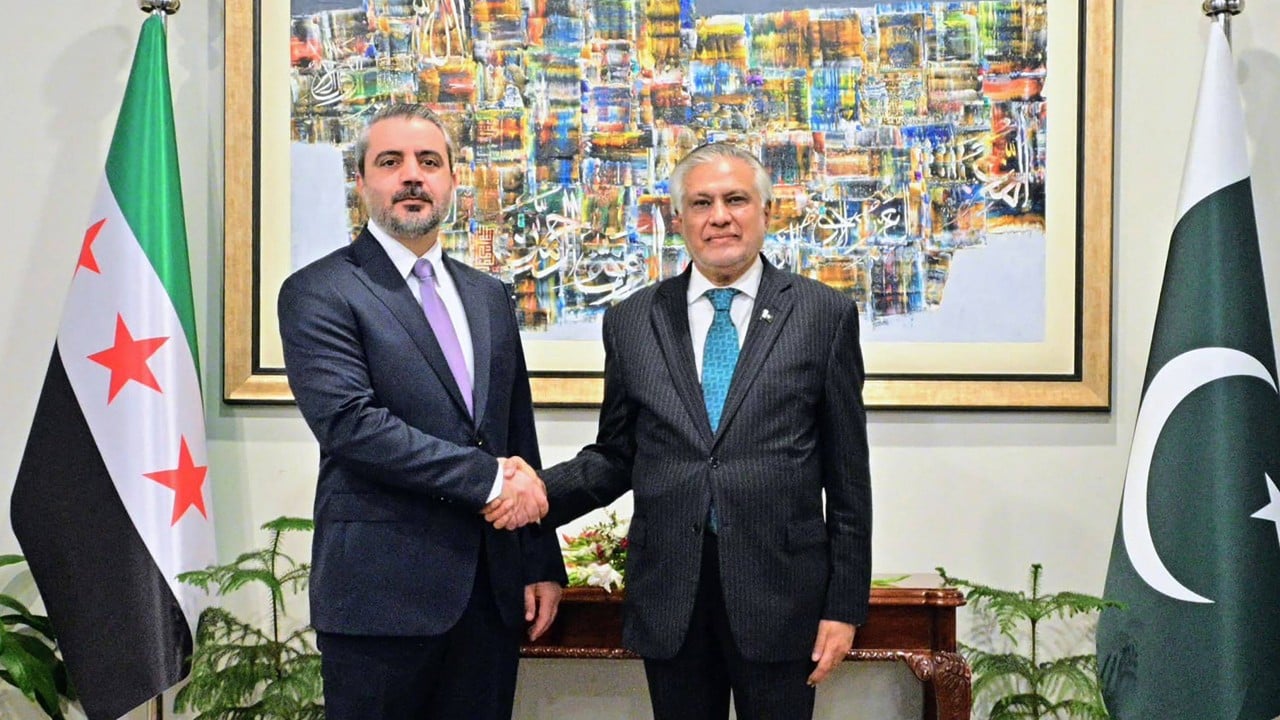
Syria’s foreign minister has told Israel’s intelligence chief that a US-mediated security agreement remains the top priority, but Damascus is now openly considering the trilateral “Mecca Pact” as a fallback — a move that would redraw regional alliances and complicate Israel’s military calculus.
The shift follows a series of Israeli strikes on Syrian military sites, including the Abu Zuhur airbase in Idlib province, which Israel says are meant to stop Syria from rebuilding its air force with Turkish help [226909]. The attack on Abu Zuhur nearly triggered a direct military response from Turkiye, with US envoy Tom Barrack revealing that Turkish officials weighed scrambling their jets as the Israeli operation unfolded [225072]. Barrack, the US Special Representative for Syria and Iraq, did not say whether Turkiye ultimately moved its planes, but his account underscores how close the region came to a broader confrontation between NATO member Turkiye and Israel [225072].
Syria’s potential move toward the pact — a formalized framework for joint defense cooperation among Pakistan, Saudi Arabia, and Turkiye — would commit member states to come to each other’s aid in case of attack [226909][226952]. The pact’s specific terms remain undisclosed, but analysts say it signals deepening military ties among the three nations [226952].
Damascus has also signaled a broader diplomatic shift, formally requesting to join the International Partnership Against Impunity for the Use of Chemical Weapons on the anniversary of the 2013 Ghouta attack [225033]. The request does not change Syria’s existing obligations under the Chemical Weapons Convention, but it marks a public change in stance from a government long accused of using chemical weapons during the civil war [225033].
Syrian Foreign Minister Asaad al-Shaibani has publicly urged Israel to seize a “historic opportunity” to resume security discussions [226045]. But with talks stalled, Israel struck a military site on Syrian territory in a move meant to prevent Syria from rebuilding its air force with Turkish assistance, sending a clear signal to both Damascus and Ankara [222528].
Syria has condemned the strikes as a “flagrant violation” of international law and the UN charter [225815]. The final decision on the pact, according to sources close to the talks, will depend on whether Washington can offer Syria a credible alternative to the trilateral defense arrangement [226909].