“Economic D-Day” Is Here: US Treasury Demands Allies Pick a Side Against Iran
The Trump administration is escalating its financial war on Iran, with Treasury Secretary Scott Bessent warning that countries and companies doing business with Tehran must choose between Washington or the Iranian regime. The new push aims to crush Iran’s economy through sanctions and partner pressure, not military strikes.
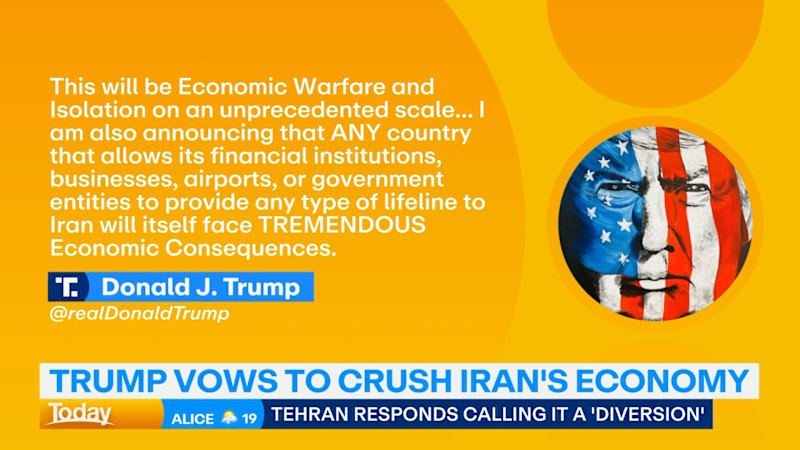
The United States has declared a new phase in its confrontation with Iran, moving away from military action and toward an aggressive economic campaign. Treasury Secretary Scott Bessent issued a stark ultimatum on Sunday: “You are either with us, or against us,” targeting not only Iran but any nation or business that supports its trade [224187]. The announcement follows President Donald Trump’s earlier threat of an “economic D-Day” against Tehran, signaling a deliberate shift from bombs to financial pressure [223841][224106].
Bessent, who is set to outline specific measures, said the United States will not return to large-scale combat in Iran, even as the conflict continues [224020]. Instead, Washington is focusing on cutting off the financial lifelines that sustain the Iranian government. The strategy is already having an effect, according to Vice President JD Vance, who said economic sanctions are proving more effective than military action. “What has been true over the last couple of weeks is they felt a lot more pressure than we have,” Vance said, calling the approach “a delicate dance” [223998].
The administration has called on its allies to back the plan to “squash” Iran’s economy, framing the issue as a test of loyalty [223510]. The threat has already moved global markets: oil prices climbed for a fifth straight session on Monday, driven by fears that a full halt to Iranian exports could remove more than one million barrels per day from global supply [224100].
Iran has dismissed the pressure campaign as a political distraction. Foreign Minister Abbas Araqchi said the US push is aimed at diverting attention from Washington’s own internal crises [223832]. Tehran’s president added that negotiations with the United States would not be a surrender, signaling openness to diplomacy while rejecting the economic siege [223095]. The Strait of Hormuz, through which about a fifth of the world’s oil passes, remains a flashpoint, with Iran calling a US map labeling it “New US Territory” an act of “delirium” [222576].
No new sanctions have been formally announced since the president’s remarks, but the administration’s message is clear: neutrality is no longer an option [223841][224100].