Oil Prices Wobble as Hormuz Tanker Traffic Returns, Cooling War Fears
Oil prices turned volatile on Friday as shipping traffic through the Strait of Hormuz recovered, easing market anxiety triggered by U.S.-Iran strikes earlier this week [208100]. In a note to clients, Commonwealth Bank of Australia said that stronger oil flows through the strategic waterway have reduced concerns about supply disruptions [208100]. The bank’s assessment suggests that the so-called “war premium”—the extra cost added to oil prices due to geopolitical risk—is now fading [208100].
The Strait of Hormuz is a narrow passage between the Persian Gulf and the Gulf of Oman [208100]. Roughly one-fifth of global oil consumption passes through it daily, making it a critical chokepoint for energy markets [208100]. When traffic there is disrupted, prices tend to spike on fears of shortages [208100]. This week, U.S. military action against Iranian targets raised those fears, pushing prices higher [208100]. But with tanker movements returning to normal, traders are recalibrating their positions, causing choppy price swings [208100].
Analysts say the situation remains fluid [208100]. Any further escalation in the region could quickly reverse the current trend [208100]. For now, the market is watching shipping data closely for signs of sustained recovery [208100].
Meanwhile, diplomatic efforts continue. Iran announced progress Sunday in talks with Oman over managing the Strait of Hormuz, a vital waterway for global oil shipments [204798]. Iran’s Foreign Ministry spokesman Esmail Baghaei said deputy foreign ministers from both countries held several rounds of talks Friday and Saturday in Tehran [204798]. The goal was to agree on “common principles and operational mechanisms” for safe navigation through the strait, while respecting the rights of both coastal states [204798]. “The talks were useful and progress was made,” Baghaei said [204798]. He added that the Omani delegation left Tehran on Saturday, but technical and political consultations continue [204798].
Oman has presented Iran with a plan to manage the Strait of Hormuz, a critical waterway at the center of tensions between Tehran and Washington [207335]. The proposal includes a system of voluntary fees, inspired by the model used in the Malacca Strait in Asia [207335]. According to reports from Reuters and the Wall Street Journal, Oman’s plan would create a regional consortium [207335]. This group would oversee maritime safety, search and rescue, and other forms of cooperation [207335]. Funding would come from voluntary contributions by regional countries and the shipping and oil industries [207335].
The initiative aims to restore stable shipping through the strait after months of disruption [205944]. Those disruptions were caused by the US-Israeli war on Iran and subsequent attacks on commercial vessels [205944]. Oman has presented Iran with a proposal, backed by Gulf Arab states, to jointly manage the Strait of Hormuz [205944].
The talks come as the United States pauses airstrikes to allow room for diplomacy, though it maintains a naval blockade against Iran [204798]. On Saturday, the United States confirmed it is maintaining its naval blockade of Iran [204798]. This comes after President Donald Trump ordered a temporary halt to bombings, breaking nearly two consecutive weeks of attacks [204798]. The pause is meant to support diplomatic efforts to resolve the conflict [204798]. In a further sign of easing tensions, Qatar announced Saturday it would resume all civilian maritime navigation starting Sunday [204798]. That traffic had been suspended for more than ten days due to the conflict escalation [204798].
The Strait of Hormuz has been a flashpoint since the US and Israel launched a joint offensive in February [207335]. Iran closed the strait in retaliation, using it as its main lever of influence [207335]. In early July, Iran resumed attacks on ships, prompting US airstrikes [207335]. The violence paused after President Trump ordered a halt to attacks, but a June ceasefire agreement has been shattered [207335]. Amid the escalation, Tehran again declared the Strait of Hormuz closed on July 5 [204798]. The US then reinstated its naval blockade on Iranian ports and ships in the area [204798]. The blockade had been suspended after a memorandum of understanding between the two sides in mid-June [204798].
A proposal to charge ships for services in the Strait of Hormuz, previously dismissed by Tehran, may now offer a path to restart stalled nuclear talks [206027]. The voluntary fee idea would cover navigation safety and environmental services in the strategic waterway [206027]. Analysts suggest the plan could serve as a confidence-building measure, though no formal agreement has been reached [206027].
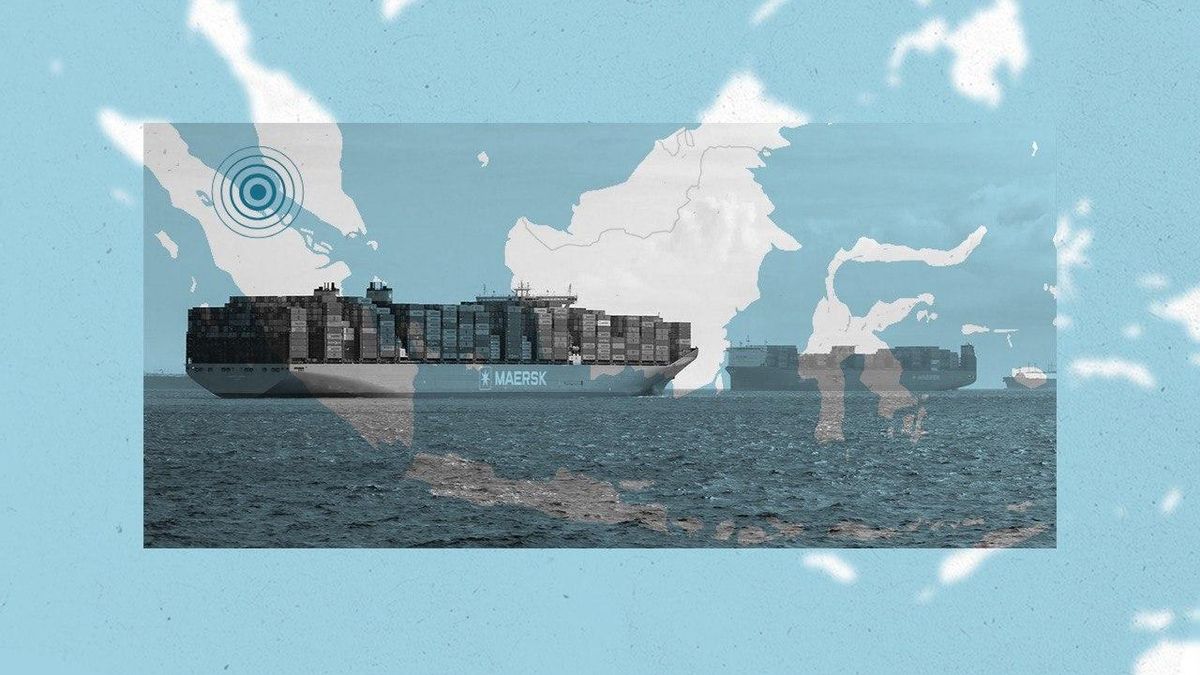
The Strait of Malacca, located between Indonesia, Malaysia, and Singapore, is one of the world's busiest shipping lanes [207335]. It handles about 21% of global maritime trade, including a third of all seaborne oil [207335]. Since 1971, the three countries have managed the strait through a tripartite framework [207335]. They do not charge a mandatory toll [207335]. Instead, they ask ships to make voluntary contributions to a fund [207335]. This money pays for navigation aids like buoys and lighthouses, as well as environmental protection [207335]. Japan, China, India, and several Gulf states are among the contributors [207335].
Experts say the idea is attractive but faces major obstacles [207335]. Azifah Astrina, a professor at Indonesia’s Gadjah Mada University, says the Malacca model works because it was created in a time of regional cooperation [207335]. “The Strait of Hormuz faces a very different political and security environment,” she says [207335]. “Tensions are extremely high, and Iran is directly involved in an ongoing armed conflict [207335].” She notes that the Malacca fund is designed for routine projects, not for security risks [207335]. In Hormuz, private companies and insurers may be unwilling to support a similar mechanism while the risk of military escalation remains high [207335].
Iran insists on maintaining control [207335]. Deputy Foreign Minister Kazem Gharibabadi said Iran rejected an Omani proposal for a shared route [207335]. Instead, Tehran wants the entire entry route under Iranian control, along with part of the exit route [207335]. Analyst Babak Vahdad says Iran is not just asking to participate in managing the strait [207335]. “It seeks predominant control over access to the Gulf,” he says [207335]. “No ship would enter the Gulf without passing through Iranian supervision [207335].”
The United Nations Convention on the Law of the Sea states that coastal states cannot charge for passage [207335]. Iran and the US are not signatories, but the treaty is widely considered international law [207335]. The head of the International Maritime Organization says any new mechanism must follow international rules [207335].