China’s Xi Drops AI Doctrine That Could Crush EU’s Rulebook – 3 New Models Top US Rivals
China’s President Xi Jinping has unveiled a new artificial intelligence doctrine that directly challenges the European Union’s regulatory model, while Chinese AI models have just beaten top US competitors in global rankings.
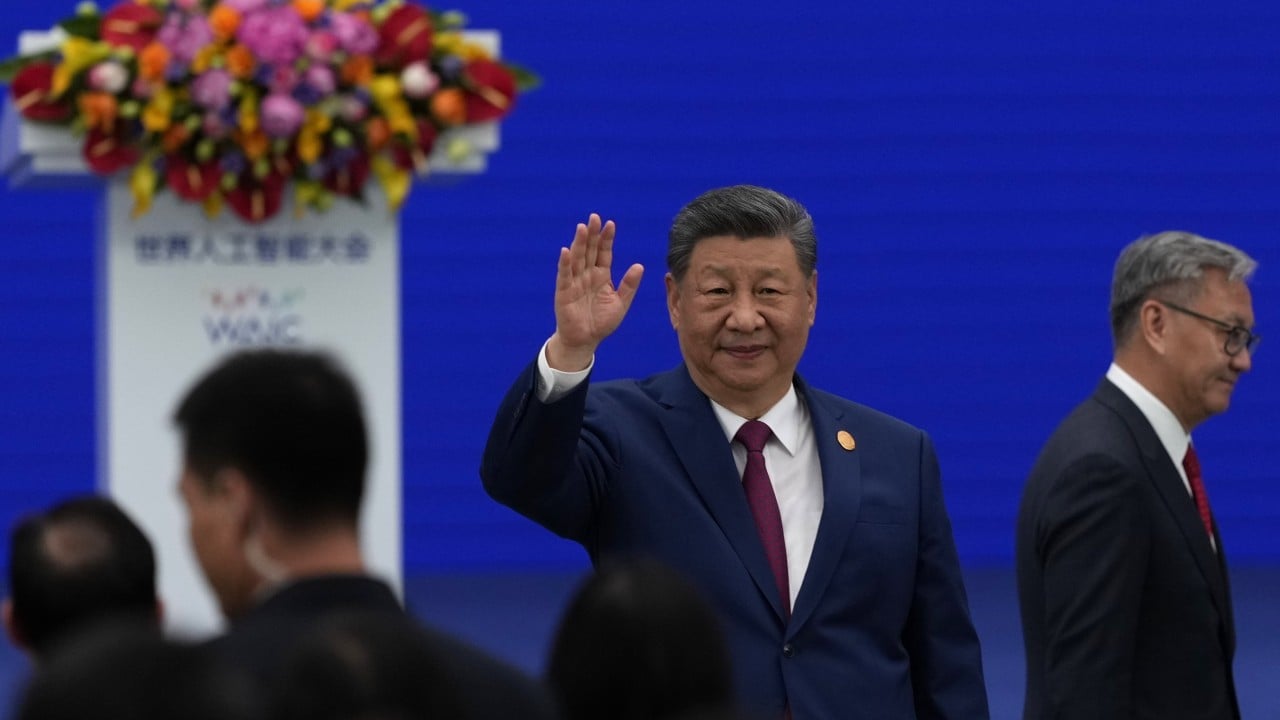
In his first in-person appearance at the World AI Conference in Shanghai on July 17, Xi called for international cooperation on AI governance, stating that “artificial intelligence should not be a solo performance by one country, but a symphony of international cooperation” [199631]. He also warned of AI risks and urged global safety standards, making clear that AI is now a national strategic priority for Beijing [198440].
The doctrine outlined Beijing’s vision for how AI should be developed and governed, directly challenging the EU’s approach of strict rules and oversight. Analysts say the framework could force European policymakers to rethink their position, as China’s scale and speed may outpace Brussels’ rule-based system [201818].
On the same day, Chinese startup Moonshot AI released Kimi K3, which it calls the largest open-weight AI system in the world. Within 24 hours, the model ranked first on Arena’s frontend coding leaderboard, ahead of every leading US model, and placed third on Artificial Analysis’s Intelligence Index [199016]. The model trails top-tier US systems like Anthropic’s Claude Fable 5 and OpenAI’s GPT-5.6 Sol on overall performance, but beats their second-tier models in key areas like coding and complex tasks [199016].
The rapid catch-up has become a key front in the intensifying technology rivalry between China and the United States [199753]. US Treasury Secretary Scott Bessent has threatened sanctions on Chinese open AI models, accusing them of intellectual property theft [201742].