Indonesia Tells Factories: Use Trade Deals to Boost Exports
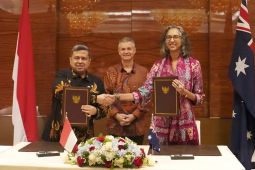
Indonesia’s Trade Minister, Budi Santoso, has urged labor-intensive industries to ramp up exports by taking advantage of international trade agreements, targeting sectors like textiles and footwear where the country already holds a competitive edge [196557]. This push comes as Indonesia pursues multiple bilateral deals to open new markets, including a halal certification agreement with Australia to simplify export processes for Islamic-compliant goods [196547], and ongoing talks with Morocco to finalize mutual recognition of halal standards, which would allow certified products to be accepted without additional testing [194329].
The government is also working to expand into new regions. Indonesia’s Ministry of Industry is pushing to increase exports of manufactured goods—such as textiles, electronics, and processed foods—to North Africa, with Morocco as a key partner [196542]. At the INNOPROM 2026 trade fair in Russia, the country signed 13 strategic memorandums of understanding focused on industrial cooperation and investment, aiming to boost machinery and electronics exports to Eurasian markets [194323][194312]. Meanwhile, Indonesia’s state logistics agency, Bulog, is negotiating rice export agreements with Malaysia and Singapore to strengthen regional agricultural trade [195408].
To support these efforts, Indonesia is rolling out a one-stop export policy that consolidates procedures into a single, streamlined system, giving exporters more leverage when negotiating prices for key commodities [196532]. The country is also pursuing broader economic partnerships, such as a trade expo with Malaysia’s Selangor state and Indonesia’s West Java province, which targets technology, manufacturing, and tourism to make cross-border trade easier for small and medium-sized companies [193261].