"Doomsday Glacier" Breakup Could Speed Up Sea Level Rise
Scientists warn that a massive ice chunk is about to break off from Antarctica's "Doomsday Glacier," raising new uncertainty about how fast the world's oceans will rise by 2100.
The glacier, officially named Thwaites Glacier, is one of the main reasons researchers are concerned about future sea levels. A huge section of ice there now appears ready to detach [178783]. "Changes can happen very quickly," said oceanographer Ola Kalén [178783]. The potential breakup adds to the difficulty of predicting exactly how much the seas will rise. The glacier's collapse could trigger a rapid release of ice, pushing up coastlines worldwide [178783].
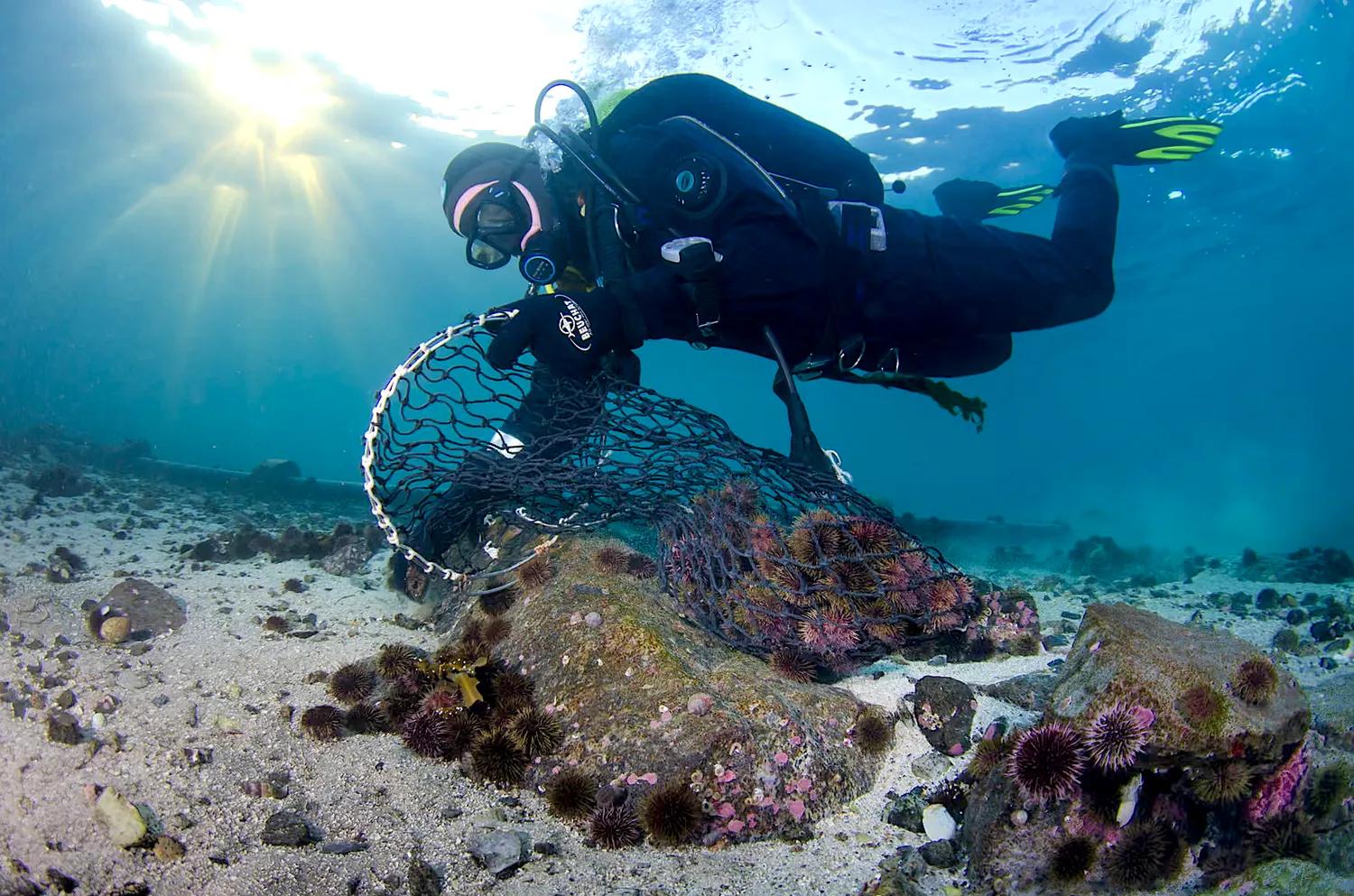
Meanwhile, scientists are ramping up efforts to save kelp forests from ocean warming. Their strategy targets two main threats: hungry sea urchins and fragile kelp varieties [178452]. Kelp forests, which provide vital habitat for marine life, are struggling as ocean temperatures rise. Heat stress weakens the kelp, making it vulnerable to predators. The main problem is sea urchins, which devour the kelp before it can recover [178452]. To solve this, researchers are attacking the urchins directly. By removing large numbers of them, they hope to give the kelp a chance to regrow. At the same time, teams are transplanting hardier kelp varieties that can better withstand warmer water [178452].
In a separate development, Indonesia will combine a giant sea wall with mangrove restoration to protect its coastline, the country's coordinating minister for infrastructure and regional development said [177463]. The project aims to defend low-lying areas from flooding and erosion caused by rising sea levels. The giant sea wall will act as a physical barrier against ocean waves, while replanting mangroves will help absorb wave energy and stabilize soil [177463]. Indonesia, an archipelago of more than 17,000 islands, is one of the world's most vulnerable nations to climate change. Rising waters already threaten major cities like Jakarta, which is sinking due to groundwater extraction [177463].
Additionally, new research reveals that more than 150,000 square kilometers of coral reefs are resilient to climate change—an area much larger than scientists previously believed [173857]. Researchers have also identified coral reefs that can withstand rising ocean temperatures. These "coral strongholds" are areas where corals show unusual resilience to heat stress, and scientists say these healthy reefs could serve as a crucial source for repopulating other, more degraded reefs [177423].