Climate Chaos Goes Global: 2025's Extreme Weather Kills Thousands, Costs Billions
Climate Chaos Goes Global: 2025's Extreme Weather Kills Thousands, Costs Billions A relentless wave of climate-driven disasters in 2025 killed thousands, displaced millions, and caused billions in economic losses worldwide, cementing extreme weather as a dangerous new normal. From catastrophic floods in Europe to crippling droughts in Africa, the year marked a turning point where climate impacts moved from alarming headlines into the fabric of daily life, according to scientific and institutional reports [36941][49594][37315][37775]. The World Meteorological Organization (WMO) confirmed the severe toll, reporting that extreme weather on the African continent alone claimed thousands of lives, impacted millions, and resulted in billions of dollars in damage [113458]. This human and economic cost underscores a broader global pattern, with 2025 ranking as the planet's third hottest year on record [49594]. Scientists directly link the increasing frequency and intensity of these disasters to human-caused climate change, driven by greenhouse gas emissions from burning fossil fuels [36941][49594]. The consequences were felt across ecosystems and societies. In the United Kingdom, a major conservation charity warned that nature was pushed to a "breaking point" by a destructive cycle of storms, heat, drought, and floods that characterized the year [36898]. The shift was not merely meteorological but perceptual. Experts note that events like droughts, heatwaves, and wildfires ceased to be seen as exceptional emergencies and instead became regular, expected occurrences [37775][37315]. This normalization of climate chaos presents a fundamental challenge to global resilience. The interconnected nature of the crisis is starkly visible in Eastern Africa, where a "triple planetary crisis" of climate change, biodiversity loss, and pollution is now directly threatening regional food security by ruining crops and killing livestock [91481]. Similarly, in South Africa, climate change is exacerbating air pollution—intensifying wildfires and dust storms—leading to a surge in respiratory illnesses like asthma and bronchitis, particularly among children and the elderly [110220]. In response to the escalating emergency, the United Nations Environment Assembly (UNEA-7) concluded with a strong call for accelerated global action, urging member states to enhance cooperation on the intertwined crises of climate change, biodiversity loss, and pollution [21446]. The assembly emphasized that strengthening "planetary resilience"—the ability of natural and human systems to withstand shocks—is now an urgent multilateral priority [21446]. Europe's 2025 Weather: A New Normal of Extremes? 2025: The Year the Weather Broke UK Wildlife Pushed to "Breaking Point" by Extreme Weather in 2025 UN Environment Assembly Demands Urgent Global Action on Climate and Biodiversity 2025: Climate Crisis Becomes Daily Life Triple Planetary Crisis Starves East Africa Climate Crisis Costs Africa Billions, Claims Thousands Every Breath a Risk: The Hidden Climate Threat to South Africa's Lungs 2025: The Year Climate Chaos Became Routine
Articles in this Cluster
A Global Push to Curb Carbon Emissions
Europe's 2025 Weather: A New Normal of Extremes?
2025: The Year the Weather Broke
UK Wildlife Pushed to "Breaking Point" by Extreme Weather in 2025
War's Toxic Toll: Iran's Environment Under Fire
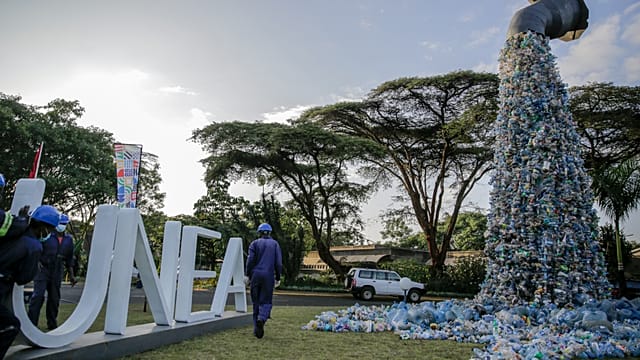
UN Environment Assembly Demands Urgent Global Action on Climate and Biodiversity
Triple Planetary Crisis Starves East Africa
Iran Conflict's Toxic Fallout Could Poison Region for Generations
Climate Crisis Costs Africa Billions, Claims Thousands
COP30: Key Facts on How a Warming Planet Affects You
Title: Every Breath a Risk: The Hidden Climate Threat to South Africa's Lungs
Iran's Oil in Flames: A Toxic Legacy for Generations
2025: The Year Climate Chaos Became Routine
