Europe Scrambles for Independence as U.S. Pressure Intensifies
Europe Scrambles for Independence as U.S. Pressure Intensifies European leaders are urgently seeking to reduce the bloc's reliance on the United States, as a series of reports and statements warn of aggressive American efforts to dominate its allies and reshape the global order. Facing what one senior official called an "ideological attack" on its social model, Europe is attempting to build its own alliances and industrial base to counter Washington's influence [78938]. The pressure is multifaceted. A new analysis from the Centre for European Reform claims the U.S. is using a "pincer attack" strategy, coordinating with Silicon Valley tech giants and leveraging Europe's need for American military protection to force policy changes [44570]. This digital dependence is a critical vulnerability; despite threats of regulation, Europe relies on U.S. companies for essential cloud computing, software, and payment systems [58167]. Militarily, the cost of true independence is staggering. Outgoing Dutch Prime Minister Mark Rutte estimated that for Europe to build a fully autonomous "war-winning" defense industry, it would need to spend up to €1 trillion, or 10% of its economic output [60363]. Instead, the immediate focus is on strengthening a European pillar within the NATO alliance to deter Russia, while longer-term plans involve forming a "hedging alliance" with Indo-Pacific nations to avoid over-reliance on any single global power [123271] [60363]. Economically, the transatlantic rift is widening. The U.S. is doubling down on fossil fuel production, while Europe is beginning to cash in on its green energy transition, generating savings and greater energy independence [88037]. However, Europe's own spending to shield citizens from high energy prices has triggered a warning from the European Union's Economy Commissioner, who cautioned that "excessive" national bailouts risk a new fiscal crisis [121783]. The geopolitical friction extends to direct conflicts of interest. European and Canadian leaders recently united to support Greenland against potential U.S. expansionism, responding to a reported U.S. policy stance—dubbed the "Donroe Doctrine"—that asserts American control over Latin American resources [43628]. Furthermore, European capitals are quietly protesting but taking no forceful action against potential U.S. moves toward war with Iran, despite recognizing the severe threat such a conflict would pose to European security and energy supplies [116413]. Analysts argue the European Union is dangerously unprepared for this new era, having relied too heavily on regulation instead of building tangible economic and military power [69895]. The bloc is now in a race to prove its global relevance by forging its own path, balancing its crucial alliance with Washington against an urgent need for strategic autonomy. EU Seeks New Allies to Counter U.S.-China Rivalry US Tech Giants and White House Ally to Pressure EU, Report Warns Belgian Minister: U.S. Waging "Ideological Attack" on Europe Europe's €1 Trillion Question: Can It Buy Military Independence? Europe's Digital Dilemma: Reliant on US Tech It Seeks to Curb U.S. Doubles Down on Fossil Fuels as Europe Cashes In on Green Energy Trump Era Demands "Political Adults" in EU, Analysts Warn US "Donroe Doctrine" Sparks Global Alarm: "Resources Belong to Us" Europe's Muted Response to Iran War Threatens Its Own Security
Articles in this Cluster
EU Seeks New Allies to Counter U.S.-China Rivalry

Orban's Re-Election Gamble: Russian Gas vs. Cheap Bills
US Tech Giants and White House Ally to Pressure EU, Report Warns

Belgian Minister: U.S. Waging "Ideological Attack" on Europe

EU Warns: Energy Bailouts Could Trigger New Fiscal Crisis

Europe's €1 Trillion Question: Can It Buy Military Independence?
U.S. Doubles Down on Fossil Fuels as Europe Cashes In on Green Energy

Trump Era Demands "Political Adults" in EU, Analysts Warn
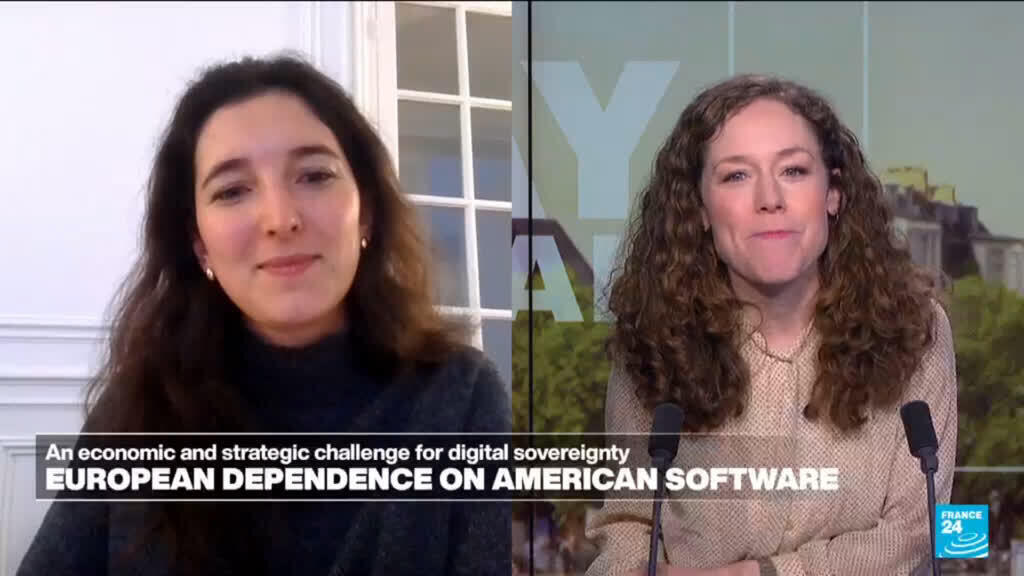
Europe's Digital Dilemma: Reliant on US Tech It Seeks to Curb
Piketty: U.S. Military Moves Signal Weakness, Not Strength

Europe's Tech Edge: It's Not About Giants, But How You Use Them