2025: The Year Climate Chaos Became a Daily Reality
2025: The Year Climate Chaos Became a Daily Reality From catastrophic floods in Europe to suffocating heatwaves and relentless wildfires, the year 2025 marked a grim turning point where extreme weather stopped being a shocking disaster and became a routine part of life across the globe. Scientists and major environmental bodies agree that human-caused climate change is now driving a "new normal" of severe and costly events, pushing natural systems and food supplies to their breaking point [36941][49594][37315]. The evidence was relentless. Europe was battered by a cycle of devastating storms, drought, and floods, with conservationists warning that UK wildlife was pushed to a "breaking point" by the extremes [36898][36941]. The United Nations Environment Assembly concluded with an urgent call for accelerated global action, identifying the intertwined crises of climate change, biodiversity loss, and pollution as a direct threat to planetary resilience [21446]. This shift from crisis to commonplace is backed by data showing 2025 was Earth's third hottest year on record, but defined by a global series of powerful and unpredictable disasters [49594]. The impacts are being felt at the most personal levels, with people reporting a "swift and stark" alteration to their daily environments and traditions, from empty fishing holes to fire-banned summers [38418]. The instability is now directly threatening global essentials. Experts warn that extreme weather is creating chaos for the world's food supply, with progress on crop yields stalling and projected to fall, putting food security in increasing peril [29191]. In regions like Malawi, a majority of citizens report that droughts and floods have worsened, forcing them to adapt their farming practices while demanding faster government action [57947]. Environmental crises are also accelerating in specific ecosystems under the dual pressure of climate change and pollution. In the Baltic Sea, warming waters and nutrient runoff are combining to create larger oxygen-depleted "dead zones," suffocating marine life [38734]. A new UN report quantified part of the cause, calculating that food and fossil fuel production inflicts an estimated $5 billion per hour in hidden environmental damage [22986]. Scientists uniformly state that the increasing frequency and intensity of these events are linked to greenhouse gas emissions, urging that without drastic cuts, the world must prepare for this extreme reality to persist and worsen [36941][49594]. Europe's 2025 Weather: A New Normal of Extremes? **2025: The Year the Weather Broke** **2025: The Year Climate Chaos Became Routine** UK Wildlife Pushed to "Breaking Point" by Extreme Weather in 2025 **UN Environment Assembly Demands Urgent Global Action on Climate and Biodiversity** Climate Crisis Hits Home: Readers Report a 'Swift and Stark' Shift Climate Change Now Threatens Global Food Supply Malawi's Changing Climate: Citizens Demand Action as Farms Fail **Baltic Sea "Suffocating": Climate Change and Pollution Double Threat** **Food and Fuel Production Costs $5 Billion an Hour in Hidden Environmental Damage**
Articles in this Cluster
Sudan's Ancient Forests Erased Amid War
A Global Push to Curb Carbon Emissions
Europe's 2025 Weather: A New Normal of Extremes?
2025: The Year the Weather Broke
UK Wildlife Pushed to "Breaking Point" by Extreme Weather in 2025
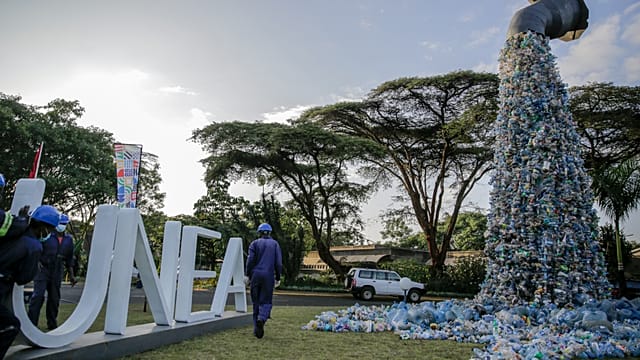
UN Environment Assembly Demands Urgent Global Action on Climate and Biodiversity
Malawi's Changing Climate: Citizens Demand Action as Farms Fail
COP30: Key Facts on How a Warming Planet Affects You
2025: The Year Climate Chaos Became Routine

New Year Begins with Global Strikes, Political Shifts, and Extreme Weather
Climate Change Now Threatens Global Food Supply
